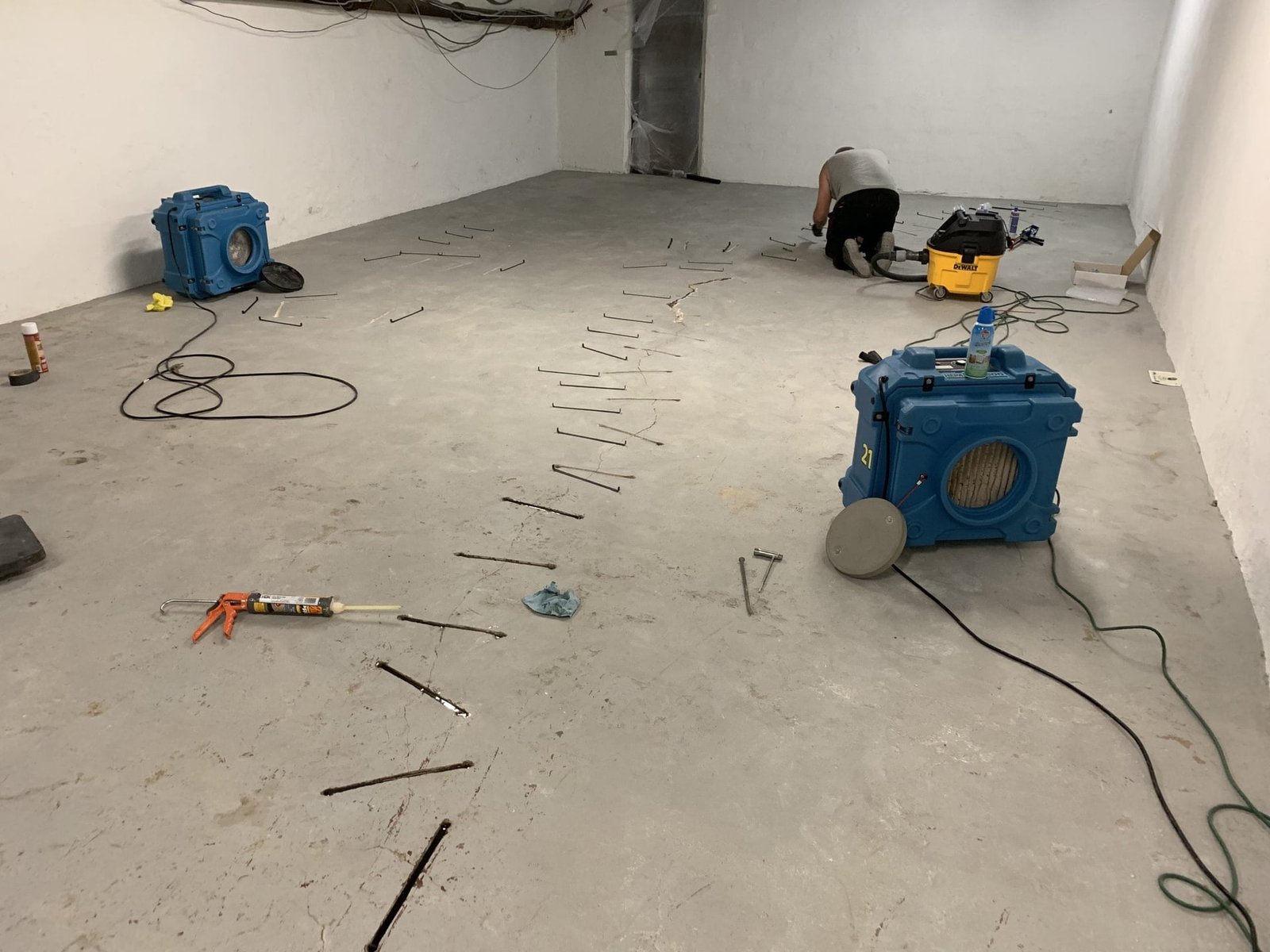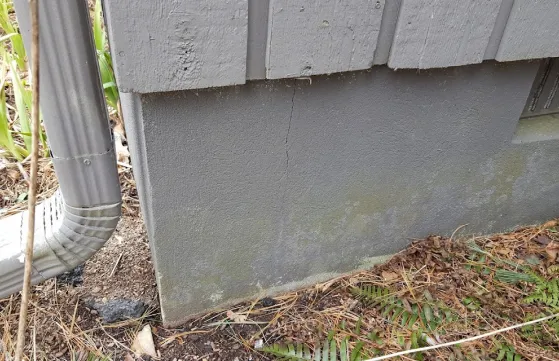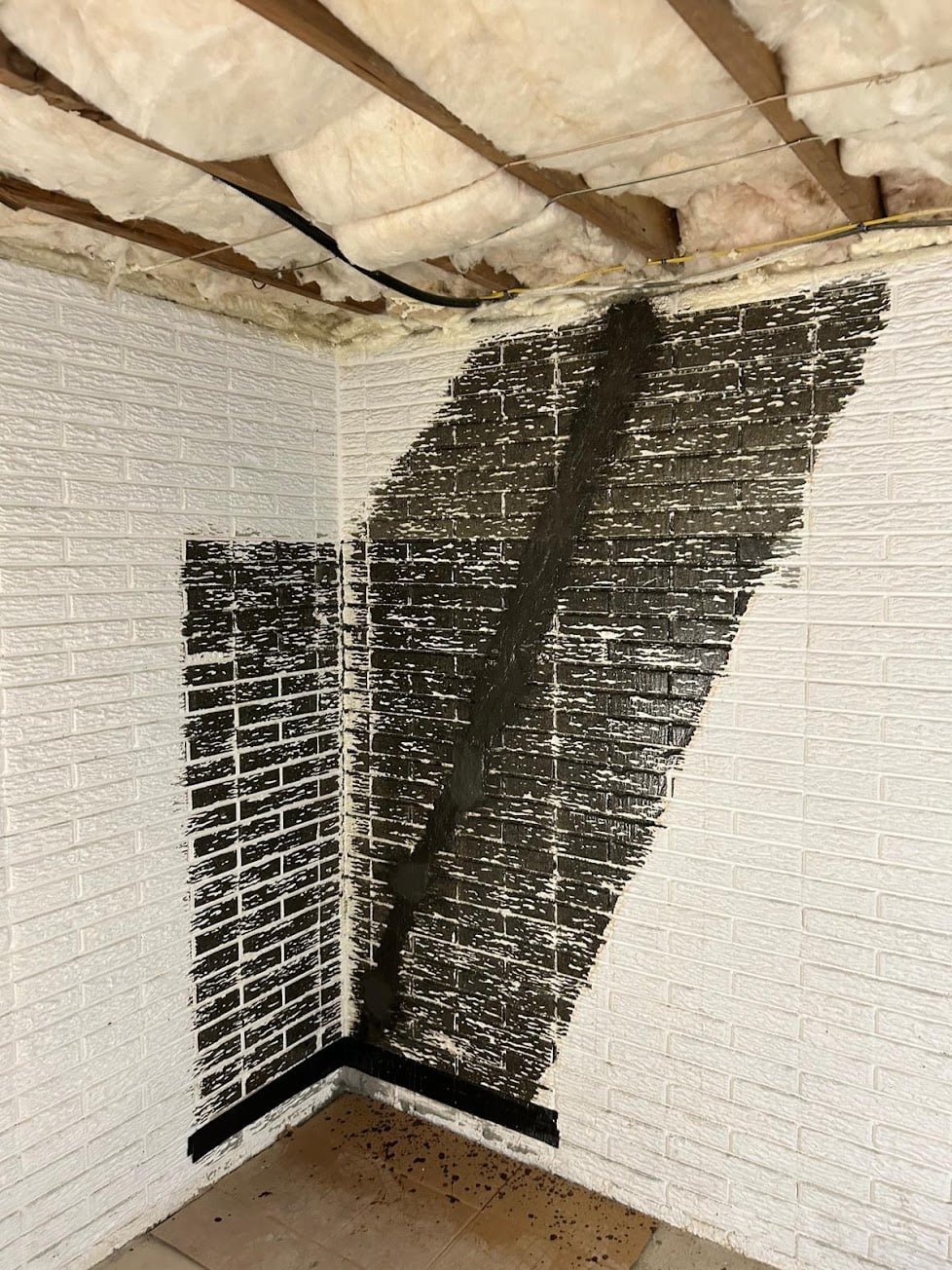
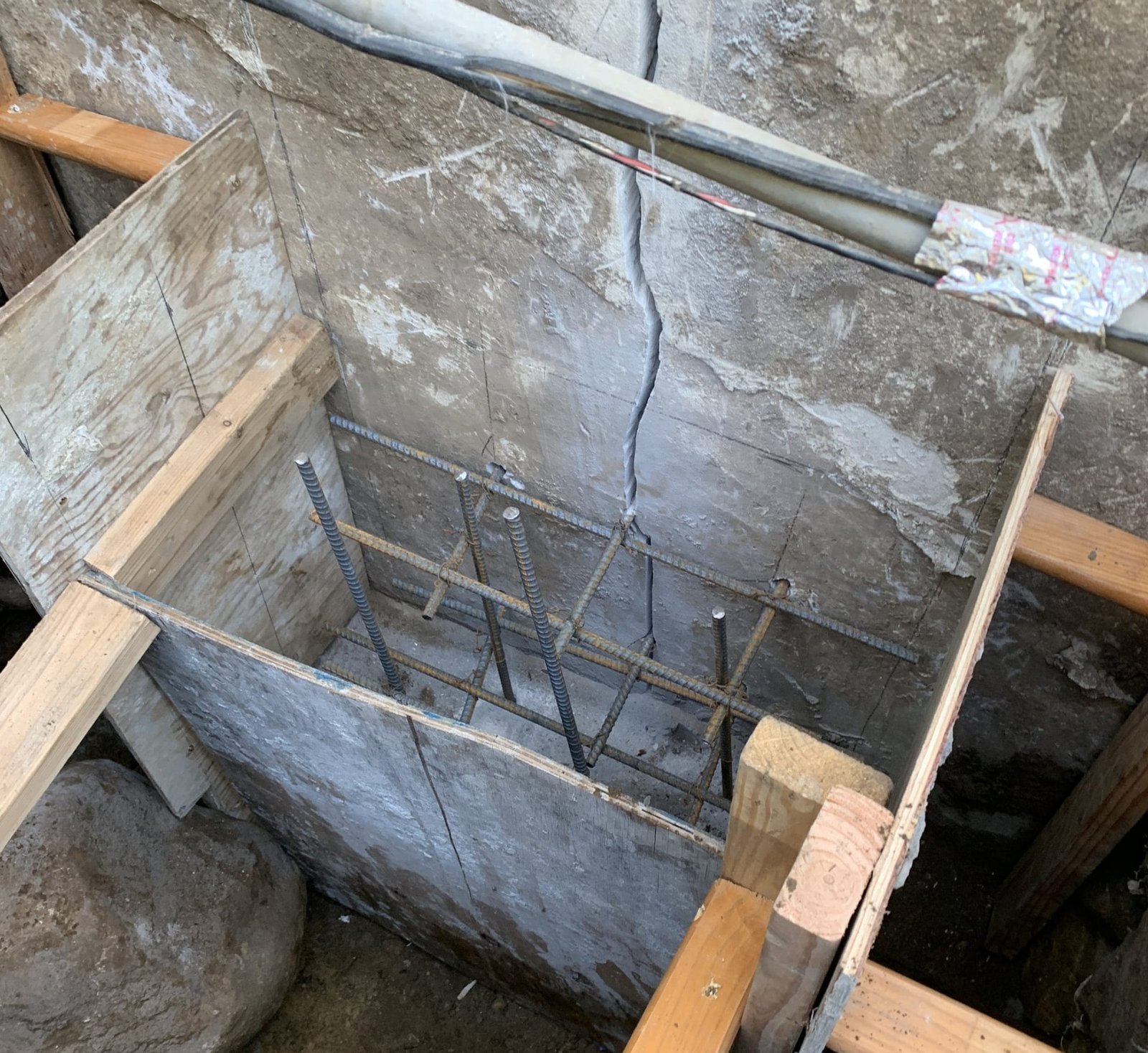

If you've gotten more than one quote for foundation crack repair, you've probably heard contractors mention either polyurethane or epoxy injection. Both are legitimate. Both fail when applied to the wrong situation. Here's the honest comparison so you know which one belongs in your wall.
The short version
Polyurethane is flexible, expands on contact with water, and is the right call for actively leaking cracks where stopping water is priority one. Epoxy is rigid, structurally stronger than the surrounding concrete once cured, and is the right call for dry structural cracks that need the wall bonded back into one monolithic piece.
Pick the wrong one and the repair fails predictably. Use rigid epoxy on a wall that's still moving and the repair just cracks again next to the old crack. Use polyurethane on a structural crack with no water and you've waterproofed the symptom without restoring the wall's strength.
When polyurethane is correct
- Active water seepage through the crack
- Crack is in a wet/damp environment (high water table, post-rain leaks)
- Movement is expected (active seasonal flexing, settling that hasn't stabilized)
- Goal is waterproofing first, structural second
Polyurethane chemistry expands when it contacts moisture, chasing water pockets through the full depth of the wall and sealing them. Once cured, it remains slightly flexible, which means it moves with the wall instead of fighting it. We use both expandable and hydrophilic polyurethane on water-active cracks, often in sequence.
When epoxy is correct
- Dry crack, no active water seepage
- Crack is structural (vertical or diagonal, with movement that's already stabilized)
- Goal is to bond the wall back together, restore tensile strength
- No anticipated future movement at the crack location
Cured epoxy is harder than the concrete around it. When pressure-injected to full depth, it bonds both faces of the crack into a single mass, so the wall behaves structurally as if the crack was never there. This is why epoxy is the right call for cracks that need engineering, not just sealing.
Where it goes wrong
Most of the failed repairs we redo (see our 68% case study) came from contractors who use the same injection material on every crack. Either they only stock polyurethane and apply it to dry structural cracks (which then crack again), or they only stock epoxy and force it on actively leaking walls (which doesn't bond properly to wet concrete and pops out within a season).
How we choose
Every inspection starts with three questions: Is the crack actively transmitting water? Is it still moving (or has movement stabilized)? What's driving the crack from outside the wall (drainage, grading, soil pressure)? The answers determine the material. There's no default product, only a default decision tree.
Raf Volkov
Raf has personally inspected and supervised more than 1,300 foundation repairs across Fairfield County, CT and Westchester County, NY since 2002. He attends World of Concrete and manufacturer trainings every year, currently holds 60+ active industry certifications, and works with a scientific background spanning microbiology, toxicology, and structural engineering — applied to every wall, slab, and footing we touch.
Got a crack that needs a real diagnosis?
We service Fairfield County CT and Westchester County NY. Free on-site inspection, honest root-cause diagnosis, written quote, no obligation.