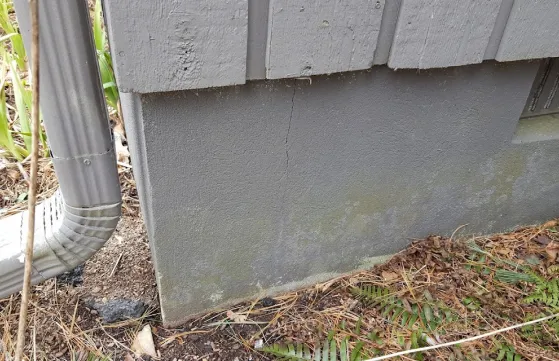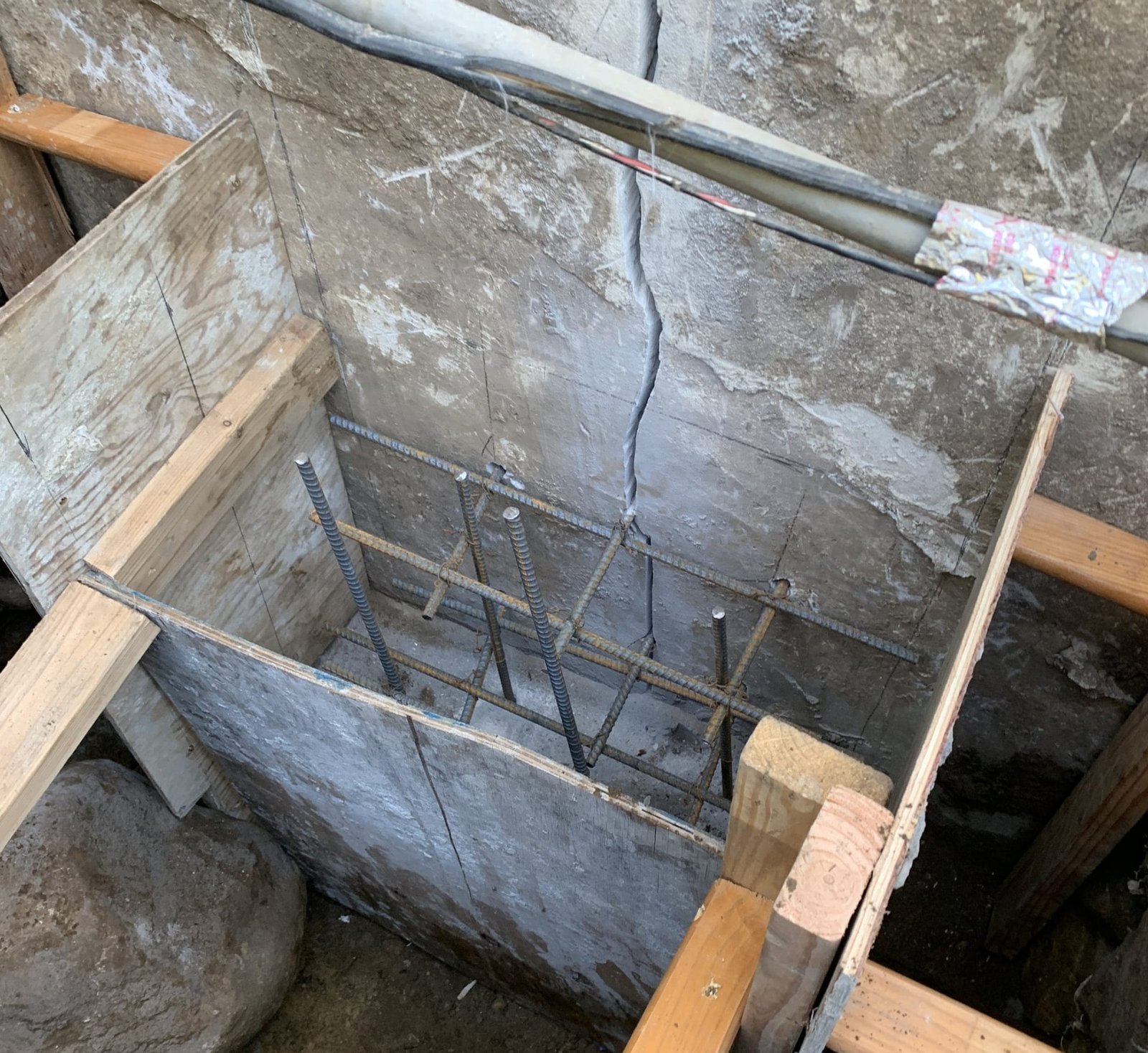
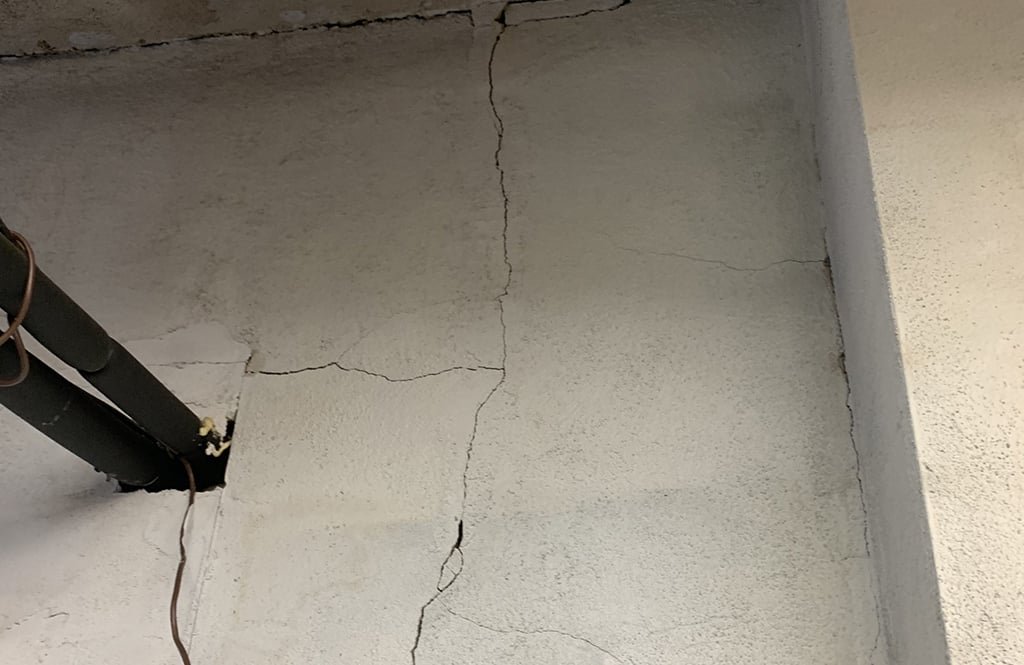
Stair-step cracks are unmistakable, they zig-zag diagonally through the mortar joints of a block (CMU) foundation wall, following the path of least resistance from one corner of a block to another. They're also one of the most misdiagnosed cracks in the industry, often patched with the wrong materials and cracking again within a season.
What stair-step cracks tell you
A stair-step crack is the foundation telling you the soil under one part of the wall is supporting more (or less) load than the rest. This is differential settlement. The wall is trying to rotate or shift around a stable section, and the mortar joints, the weakest line in a block wall, give way.
The crack pattern itself reveals the direction of movement: it points away from the moving section, toward the more stable area. A wider top with a narrower bottom usually means rotational movement. Uniform width often means uniform settlement.
Common causes
- **Soil consolidation**, organic material under one part of the foundation decomposed or compacted over time
- **Water erosion**, downspouts or grading washed soil away from one footing
- **Tree root pressure**, large root displacing soil under the wall, or removed roots leaving voids
- **Hydrostatic pressure**, swelling clay soil pushing one section laterally during wet seasons
- **Original construction**, footings that didn't reach undisturbed soil or weren't sized for the load
Why surface patching fails
Tuckpointing the crack, refilling the mortar joints with new mortar, looks great for about 8 months. Then the underlying movement returns, the new mortar separates from the surrounding masonry, and you're back where you started. Mortar has almost no tensile strength, it's a compression-only material. Patching the symptom of differential settlement with more mortar is structurally hopeless.
What actually works
Permanent repair of a stair-step crack in a block wall requires two parts: stabilizing the soil so movement stops, and reinforcing the wall so future stress doesn't reopen the crack.
- 1**Address the cause first**, fix drainage, redirect downspouts, or stabilize soil with polyurethane injection where applicable
- 2**Reinforce the wall**, carbon fiber straps bonded across the crack distribute future stress laterally and prevent movement
- 3**Seal the crack**, fiber-reinforced surface coatings (designed for block walls, not poured concrete) bond the masonry back into a continuous surface
- 4**Install drainage relief**, where appropriate, an interior French drain or exterior waterproofing reduces hydrostatic pressure on the wall going forward
When to involve a pro immediately
If the crack is wider than 1/4 inch, growing visibly over months, or accompanied by leaning, bowing, or floor unevenness above the wall, do not wait. Differential settlement that's allowed to continue can compromise load-bearing structure above. Get a free inspection before it becomes a foundation replacement conversation.
Raf Volkov
Raf has personally inspected and supervised more than 1,300 foundation repairs across Fairfield County, CT and Westchester County, NY since 2002. He attends World of Concrete and manufacturer trainings every year, currently holds 60+ active industry certifications, and works with a scientific background spanning microbiology, toxicology, and structural engineering — applied to every wall, slab, and footing we touch.
Got a crack that needs a real diagnosis?
We service Fairfield County CT and Westchester County NY. Free on-site inspection, honest root-cause diagnosis, written quote, no obligation.