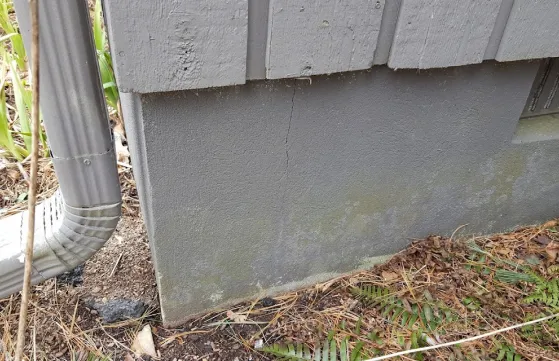

Almost every basement floor, garage slab, driveway, and pool deck across Fairfield and Westchester County will develop cracks at some point. Most are cosmetic. A few signal something serious moving below the slab. The trick is reading the pattern, because the pattern points to the cause, and the cause dictates the right repair.
We have repaired more than 1,300 foundations across CT and NY since 2002, and roughly 68% of that work has been fixing failed repairs from other contractors. The single most common reason those repairs failed is the same: someone treated the crack as a surface problem when it was actually a soil, drainage, or structural problem talking through the slab. The 10 crack types below cover the patterns we see in the field, with the cause behind each one and the method we use to fix it permanently.
How to read a slab crack before you reach for filler
Three observations decide the right repair every time. Width, direction, and behavior over time. A hairline you can barely see usually means concrete shrank as it cured. A crack wider than a credit card, or one that has stepped or shifted, almost always means something below moved. A crack that grows from one season to the next, or weeps water during heavy rain, points to active hydrostatic pressure under the slab.
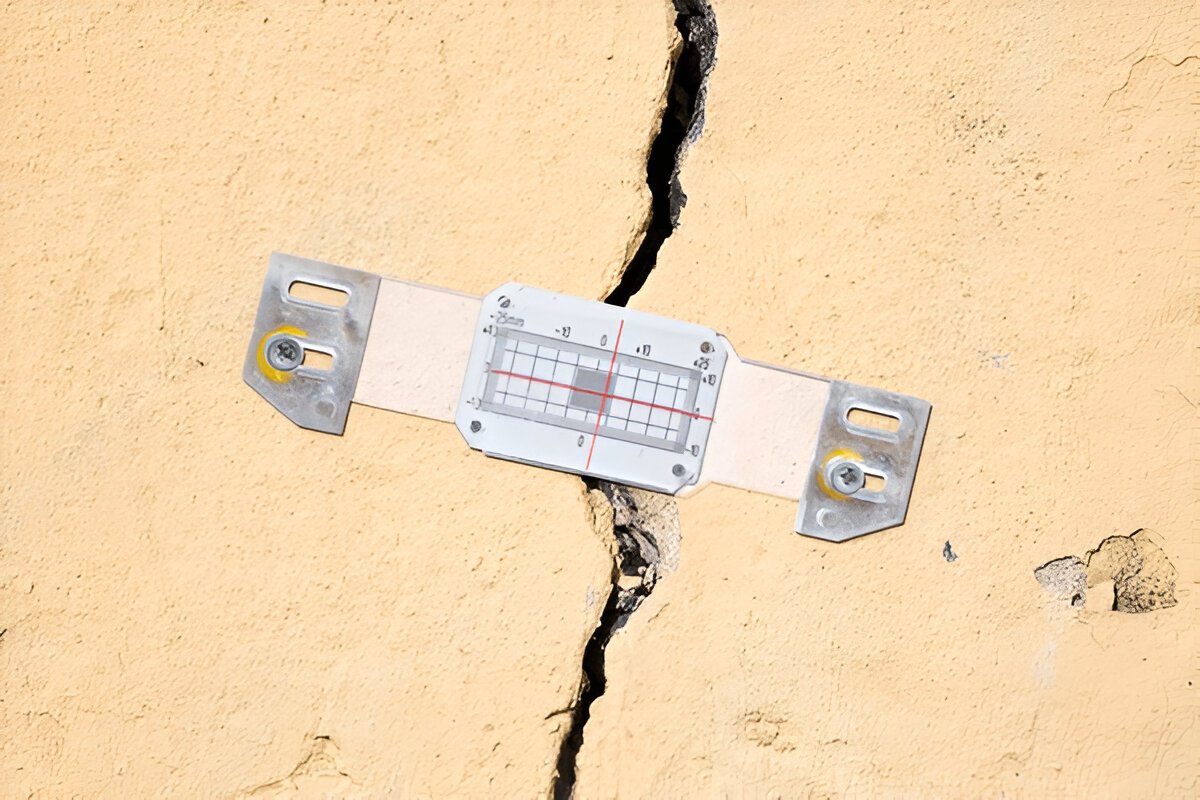
Track each visible crack with a date and a pencil mark across it. If the line breaks within a few months, the crack is alive. Alive cracks need root-cause diagnosis, not just filler. Static cracks can usually be sealed and forgotten. Both can be repaired permanently, but only if you choose the matching material and method.
1. Hairline shrinkage cracks
Thin spider lines smaller than the edge of a business card, often appearing within the first year after a slab is poured. Concrete loses water as it cures and the slab pulls on itself. Most basement and garage slabs in Connecticut and New York show at least a few of these by year two.
Cosmetic in almost every case. They do not threaten the structure, but they can let surface water and moisture vapor through over time, which is why we still seal them on finished basements and pool decks. We use a low-modulus polyurethane crack sealer that stays flexible through seasonal movement, not a rigid concrete patch that fails in two winters.
2. Plastic shrinkage cracks
Short, irregular cracks that show up before the slab fully cures, often at reentrant corners where two slab edges meet. Caused by water leaving the surface too fast in hot or windy conditions during the pour. Common in driveways and pool decks poured in summer without adequate moisture protection during cure.
Cosmetic unless they widen, which they rarely do. We treat them the same way as hairline shrinkage cracks. The fix is sealing, not structural repair. If a contractor quotes you carbon fiber for a plastic shrinkage crack, you are being upsold.
3. Expansion cracks
Wide, straight cracks running along the slab in summer, often near walls or fixed objects the slab is pushing against. Concrete grows about 5 millimeters per 10 meters per 100 degrees Fahrenheit. When a slab has no expansion joint, or the joint has failed, the slab cracks itself instead of moving.
The crack itself is a symptom of a missing or failed joint. Sealing it without restoring expansion capacity sends the crack back within one or two seasons. Our repair installs a real expansion joint with a compressible filler (closed-cell foam or asphalt-impregnated board), then seals the surface with self-leveling polyurethane sealant that flexes through the joint's full range of motion.
4. Settlement cracks
Cracks wider at one end than the other, often diagonal, with one side of the slab visibly lower than the other. The classic pattern is a crack that runs from a corner toward the center of the slab, with a half-inch step where the slab has dropped. Cause: the soil under that section of the slab consolidated, washed out, or settled under load.
Always a structural problem. Sealing the crack hides the symptom and the slab keeps dropping. We use polyurethane chemical grout injection (HMI-certified equipment) to lift the slab back to grade and densify the soil under it. Foam goes in through small drilled ports, expands on contact, and fills voids while reaching design density in roughly 15 minutes. Once the slab is back to plane, the crack itself gets sealed with flexible polyurethane to keep water out.
5. Heaving cracks (frost heave)
The opposite of settlement. The slab has lifted instead of sunk, usually in winter. Saturated soil under the slab froze, expanded, and pushed the slab upward. When the soil thaws in spring, the slab drops, but rarely back to its original plane. Common on garage slabs and concrete walks across CT and NY where frost penetrates 40 to 60 inches deep most winters.
Repair is twofold. We level the slab back to plane with polyurethane grout, then address the underlying water problem so the freeze cycle does not repeat. That usually means correcting drainage at the slab perimeter, sometimes adding a frost wall or vapor barrier, depending on what we find on inspection. Treating just the visible crack guarantees it returns the next freeze-thaw cycle.
6. Diagonal cracks across a basement slab
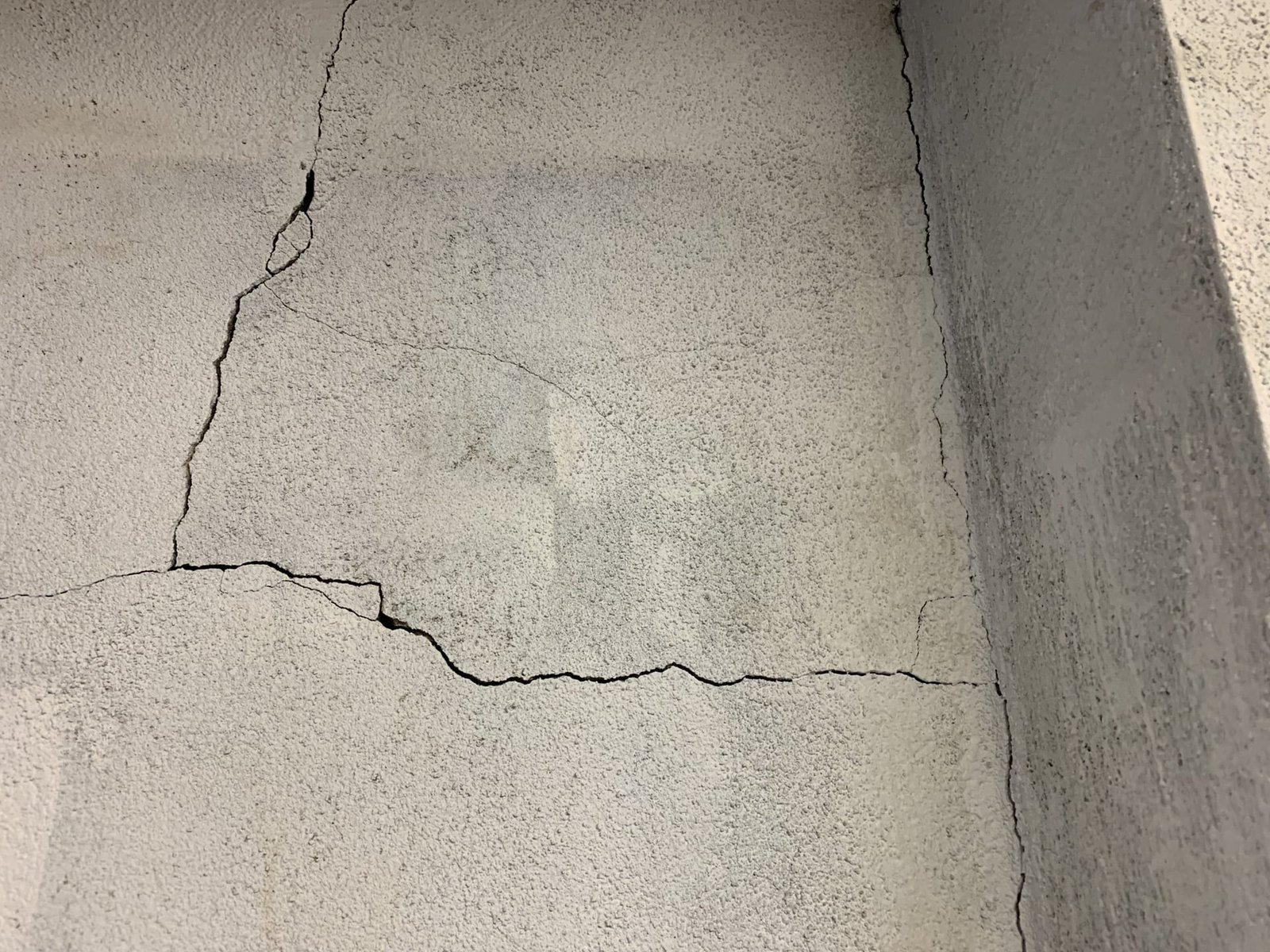
Cracks that cut diagonally across a basement floor, often near a column or support post, frequently with a slight slope change you can feel walking across the slab. They signal foundation movement, not just slab movement, because the basement slab is bonded to the perimeter footings.
Structural every time. Sealing the slab without diagnosing the foundation is a waste of money. Our process: full structural inspection of perimeter walls and footings, soil analysis around the foundation, then a coordinated repair that may include underpinning, soil stabilization, and slab leveling before the floor crack itself gets sealed. Qualifying structural repairs come with our lifetime transferable warranty.
7. Horizontal cracks running parallel to a wall
Cracks parallel to a basement or foundation wall, usually 6 to 18 inches off the wall, sometimes with water seepage running along the line. Caused by lateral pressure from saturated soil pushing the wall inward and shearing the slab where it meets the wall.
Serious. A horizontal crack near a wall is often the first visible sign of a bowing wall. The slab cannot fix itself while the wall keeps pushing on it. The repair starts on the wall, with carbon fiber strap reinforcement (we install Fortress Stabilization carbon fiber, ICC-ES report ESR-3815) or a Stabl Wall system depending on how much movement we measure. Once the wall is stabilized, the slab crack gets injected with structural epoxy or polyurethane based on whether it is still moving.
8. Corrosion cracks (cracks above rebar)
Straight cracks running along a line, often with a brown stain coming through, with concrete spalling (small chips and flakes) along the crack edges. The rebar inside the slab has rusted, expanded, and pushed the concrete apart from the inside. Common in older slabs (40+ years), pool decks exposed to chlorinated water, and exterior slabs that have absorbed road salt over many winters.
Repair scope depends on how much steel is affected. For isolated corrosion, we chip out the spalled concrete, treat the exposed rebar with a corrosion-inhibiting epoxy primer, and rebuild with polymer-modified mortar (Sika MonoTop range, manufacturer-trained). Widespread corrosion across a slab usually means partial or full slab replacement is more economical than spot repair.
9. Map cracking and crazing
A web of fine cracks across the slab surface, like cracked porcelain or a dried lakebed. Caused by overworking the surface during finishing, by adding water to the surface during cure, or by the top layer drying faster than the slab body. Cosmetic on most basement and garage slabs.
We typically do not recommend major repair for map cracking unless the slab is decorative (stained, polished, or epoxy-coated). For functional slabs we apply a penetrating densifier (lithium silicate) that fills the microcracks and hardens the wear surface. For visible slabs that need a uniform finish, polished concrete overlays cover the crazing while preserving slab function.
10. Structural cracks in the foundation slab
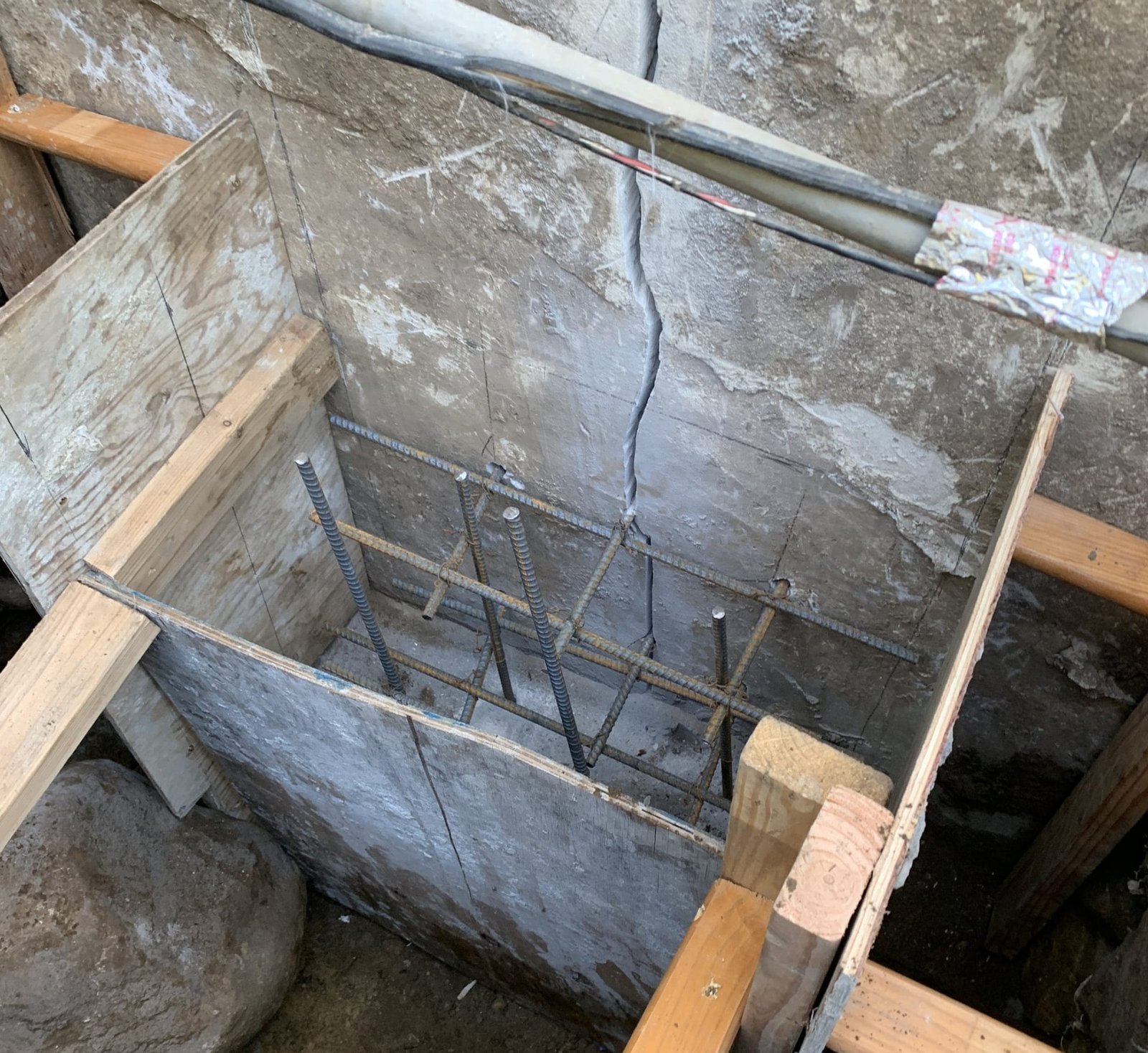
Wide cracks (more than 1/4 inch) running across structural slab sections, often with offset (one side higher than the other), sometimes accompanied by cracks in the perimeter walls. These are not slab problems. They are foundation problems showing up through the slab.
Every structural slab crack in our service area gets the same diagnostic protocol. We measure crack width to 0.01 inch with calipers, check slab elevation against original plane with a laser level, look for soil grade and drainage problems around the foundation perimeter, and inspect the foundation walls for matching cracks. The repair always addresses the cause first (drainage, soil, structural loading) and then the visible crack. Anything else is decorative work that fails.
Cosmetic versus structural, a fast field test
Three questions tell you whether to call a pro or buy a tube of sealant. First, is the crack wider than a credit card? Second, is one side of the crack higher than the other (use a level across it)? Third, has it grown in the last 6 months (compare to old photos or a pencil reference line)?
One yes means schedule a free inspection. Two yeses mean stop using the slab if it carries load and call us today. Three yeses mean the slab is actively moving and the foundation should be assessed before any repair touches the visible crack.
Materials we install (and the ones we never use)
Hardware-store hydraulic cement and DIY epoxy kits work on tight hairline cracks in dry, non-moving slabs. They fail on anything else. Our standard catalog for slab repair across Fairfield, Westchester, Putnam, and Dutchess counties includes Sika SikaDur 35 Hi-Mod LV epoxy for structural welding, Emecole Metro polyurethane resins for full-depth crack injection, Fortress carbon fiber straps for structural reinforcement (ICC-ES ESR-3815), and HMI polyurethane chemical grout for slab lifting and soil stabilization. Every product on that list requires manufacturer certification to purchase, which is why DIY versions of the work routinely fail.
What to do today if you found a slab crack
Photograph the crack with a coin or business card next to it for scale. Date the photo. Mark the ends with a pencil and the date. Check again in 30 days. If the crack has grown past your pencil marks, water has come through, or the slab has shifted in any direction, schedule an inspection. Free across CT and NY, written quote on the spot, no obligation.
Raf Volkov
Raf has personally inspected and supervised more than 1,300 foundation repairs across Fairfield County, CT and Westchester County, NY since 2002. He attends World of Concrete and manufacturer trainings every year, currently holds 60+ active industry certifications, and works with a scientific background spanning microbiology, toxicology, and structural engineering — applied to every wall, slab, and footing we touch.
Got a crack that needs a real diagnosis?
We service Fairfield County CT and Westchester County NY. Free on-site inspection, honest root-cause diagnosis, written quote, no obligation.