
Stair-Step Cracks in a Block Foundation
Stair-step cracks are unmistakable, they zig-zag diagonally through the mortar joints of a block foundation wall. They're also one of the most misdiagnosed cracks, often patched with the wrong materials and reopening within a season. Here's the right approach.
Visual signs that match this problem
- A diagonal crack that follows the mortar joints in a stair-step pattern
- Block (CMU) wall, not poured concrete
- Often wider at one end (top or bottom) than the other, indicating direction of movement
- May be accompanied by cracking in drywall above or sticking doors on adjacent walls
- Can appear interior, exterior, or both
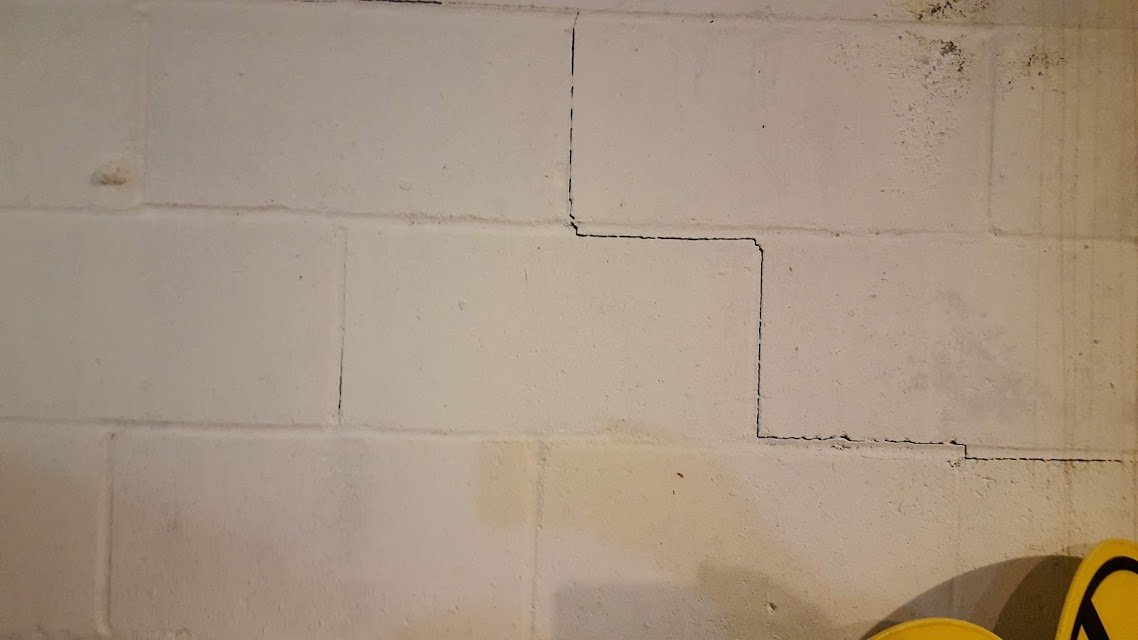
The real causes, in order of how often we see them
Differential settlement
The most common cause. The soil under one part of the foundation has compacted or eroded more than the rest, causing one section to settle faster. The wall shears along the weakest line, the mortar joints.
Water erosion of supporting soil
Downspouts dumping water against the foundation, or slope toward the house, washes soil away from one footing over years. The wall settles into the void.
Tree root pressure or removal
Large tree roots can displace soil under one part of the wall. If a tree is later removed, decomposing roots leave voids, again causing differential settlement.
Hydrostatic pressure on block walls
Block walls handle lateral pressure differently than poured concrete. Stair-step cracking from outside-in pressure is more common in CMU than poured walls.
Stair-step cracks indicate active foundation movement. Left untreated, the differential settlement continues, the crack widens, and structural elements above (floor joists, load-bearing walls) can begin to rotate. Surface patching is structurally hopeless because mortar has no tensile strength.
How we'd actually fix it
Step-by-step protocol we follow. Same approach across wall crack repair jobs in CT and NY.
Stop the movement
Soil stabilization, drainage correction, or in severe cases helical piers under the affected section. The cause must be addressed before any wall reinforcement, otherwise the new repair just opens a new crack.
Reinforce the wall
Carbon fiber straps bonded across the crack distribute future stress laterally and prevent recurrence. Block walls require specific application protocols that differ from poured concrete.
Re-tuckpoint and seal
We rebuild the mortar joints with a higher-strength fiber-reinforced mortar, then apply a flexible sealant designed for masonry. Surface looks restored without sacrificing the underlying reinforcement.
Drainage relief where appropriate
If the cause was hydrostatic or settlement-driven, we install drainage relief (interior French drain, exterior downspout extension, regrading) so the wall isn't loaded the same way again.
Lifetime warranty on the structural repair
Carbon fiber reinforcement is backed by our lifetime transferable warranty. If the crack reopens at the repaired location, we come back free.
In-depth guides on this topic
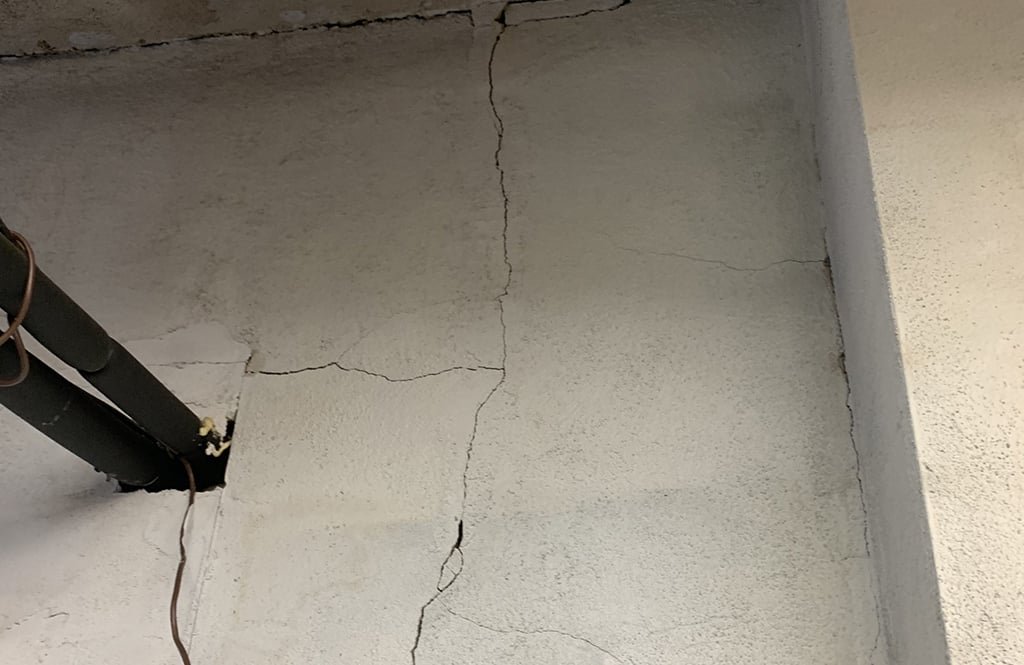
Stair-Step Cracks in Block Walls: Causes and Permanent Repair
If you see a stair-step crack tracking through the mortar joints of a block foundation, you're looking at differential settlement. Here's what causes it and the only repair methods that actually hold.
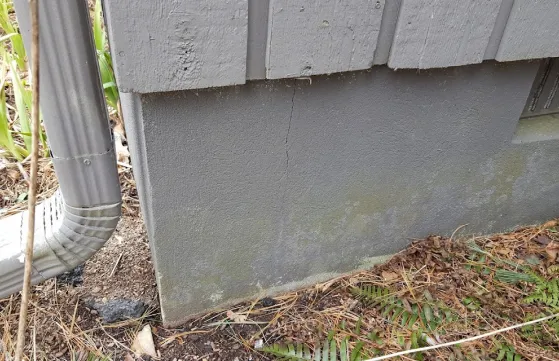
Everything You Need To Know About Foundation Cracks
Concrete foundation cracks develop for many reasons, soil settling, temperature, shoddy construction, structural issues. Here's how to identify the cause, classify the crack, and know when to call a pro.
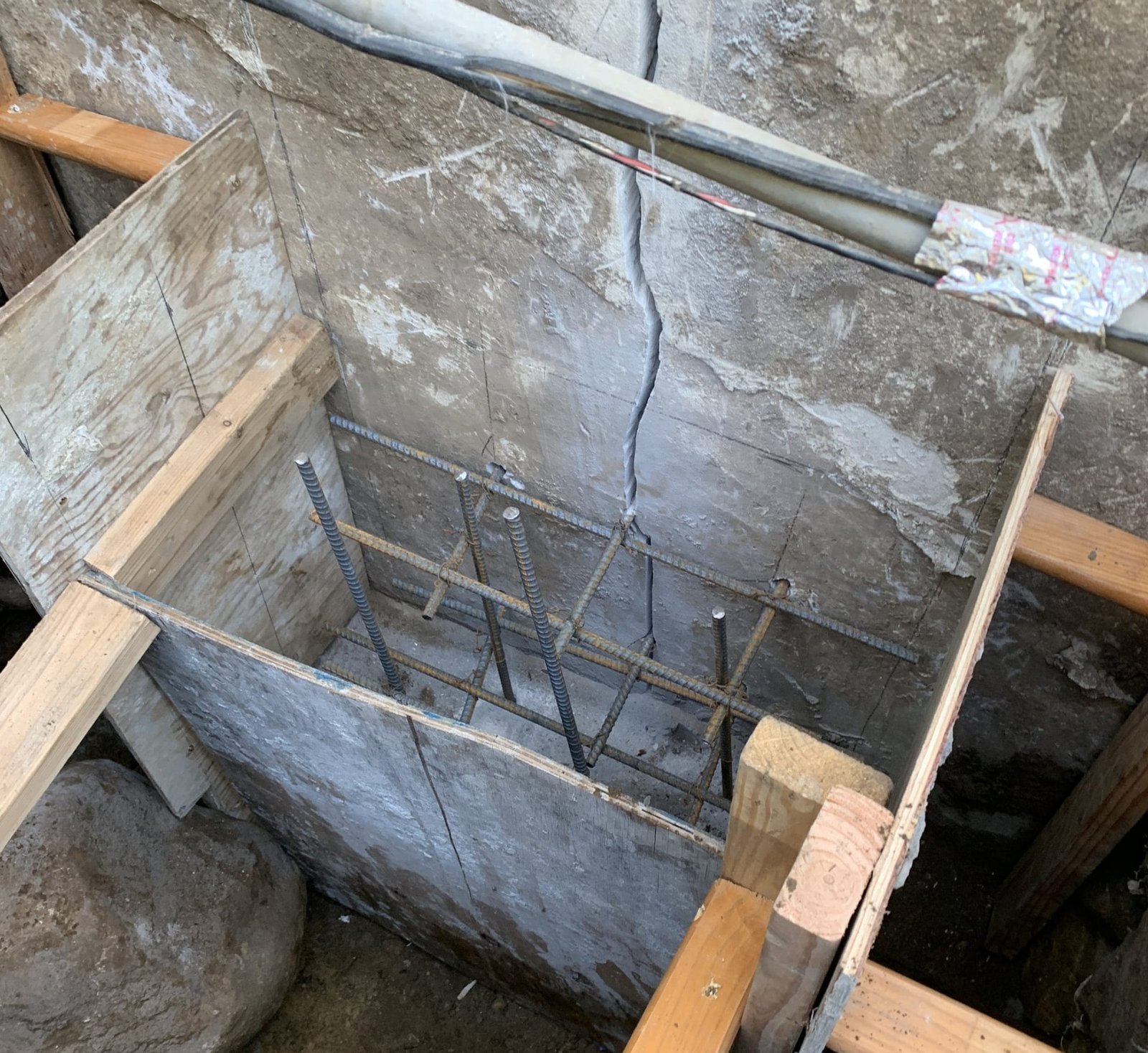
What to Know When You Find Foundation Cracks
Experts identify and repair foundation cracks after a thorough inspection. Here's what professionals look for, and how you can tell if your crack is a cosmetic issue or a structural red flag.
Stair-Step Cracks in a Block Foundation, answered
Is a stair-step crack always serious?
Yes, in the sense that it always indicates real movement, not just cosmetic shrinkage. The severity depends on how much the wall has shifted, whether movement is ongoing, and what's loading above. An inspection determines urgency.
Why does tuckpointing alone fail?
Mortar has compressive strength but almost no tensile strength. New mortar applied over an active crack just becomes the next crack the next time the wall moves. The underlying movement has to be stopped first, or the wall has to be reinforced to resist it, before mortar repair makes sense.
Can I just patch the inside?
Not effectively. The crack runs through the full thickness of the wall. Inside-only patching leaves the exterior open, so water and movement continue from outside in.
Do I need helical piers?
Usually no. Helical piers are reserved for severe differential settlement where the soil under the footing has lost bearing capacity. Most stair-step cracks we see are reinforced with carbon fiber and drainage corrections instead.
What does a typical repair cost?
Carbon fiber reinforcement of a stair-step crack section: typically $1,500-$4,500. Drainage corrections add $1,500-$8,000 depending on scope. Severe settlement requiring piering: $10,000-$30,000+. Free written quotes.
Got a stair-step cracks in a block foundation?
Free on-site inspection · written quote · lifetime transferable warranty on qualifying structural repairs.