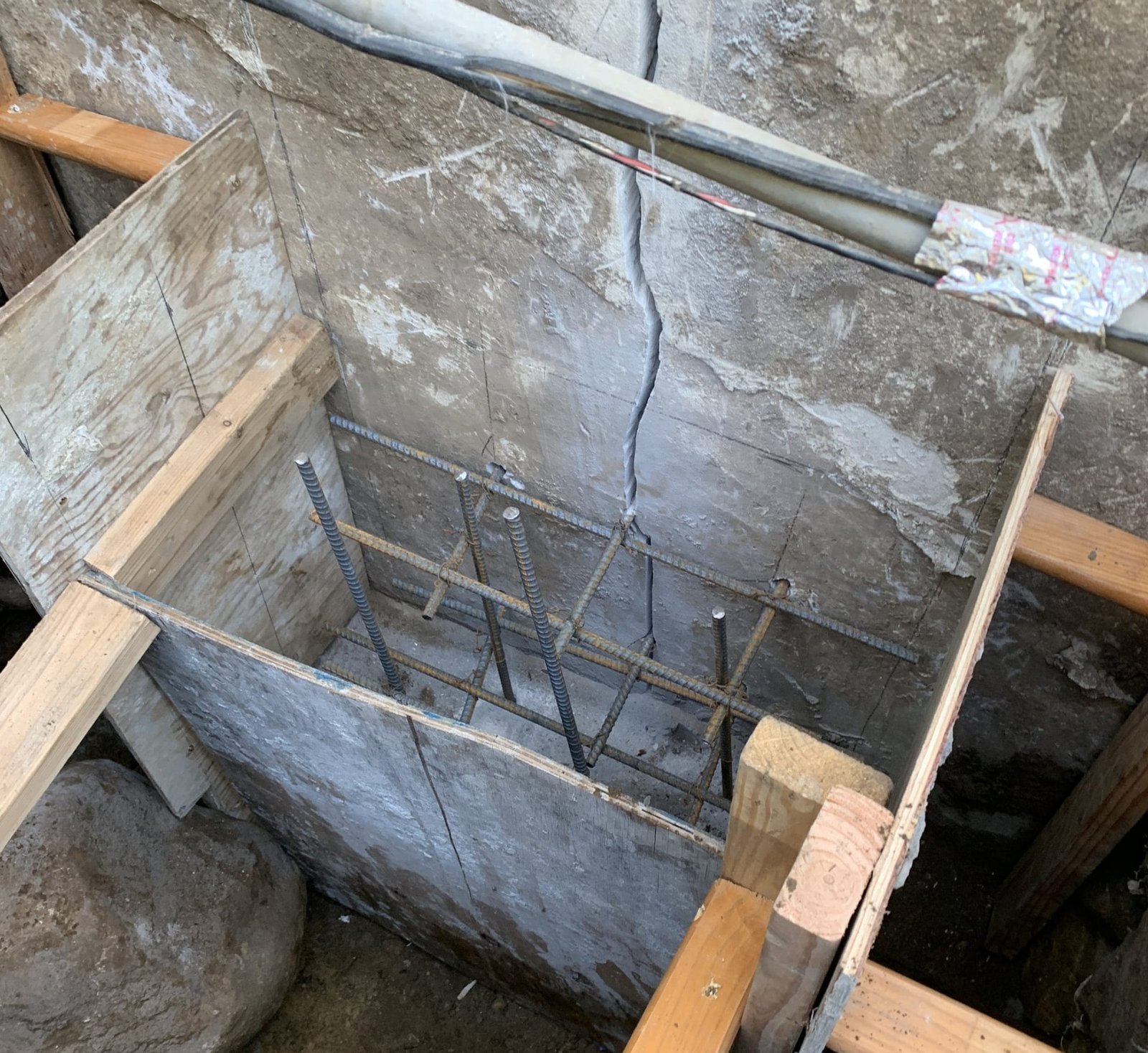
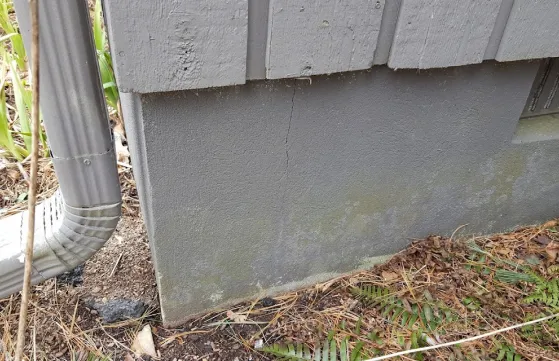

Homeowners often ask if a 1/16-inch crack is dangerous, or if a 1/4-inch crack means the foundation is failing. Width alone is not the diagnostic, the pattern, location, and behavior of the crack matter more than the millimeter measurement. Here's how the actual classification works.
How to measure a crack accurately
Use a crack gauge or feeler gauge, not a ruler. A crack gauge is a thin plastic card with calibrated openings that lets you find the exact width within a few thousandths of an inch. They cost about $5 and are sold at any hardware store.
Measure at the widest point of the crack and note whether the width is uniform or varies along the length. A crack that's wider at the top than the bottom (or vice versa) is structurally different than one of uniform width.
The general width framework (with caveats)
- **Hairline (under 1/16 inch)** — usually cosmetic, often from concrete shrinkage during cure. Worth sealing if it admits water, otherwise typically not urgent
- **Narrow (1/16 to 1/8 inch)** — depends entirely on pattern. Vertical: usually settlement, manageable. Horizontal: serious regardless of width
- **Medium (1/8 to 1/4 inch)** — getting attention. Vertical and stable can still be routine; horizontal or stair-step is structural
- **Wide (over 1/4 inch)** — structurally significant in most patterns; requires inspection
- **Anything growing** — by definition active, requires inspection regardless of current width
Why pattern matters more than width
A 1/32-inch horizontal crack near the slab is almost always more serious than a 1/4-inch vertical crack from new-construction settlement. The horizontal crack signals lateral pressure and potential wall failure. The vertical crack signals settlement that's already happened and is now stable. Width is similar; structural meaning is opposite.
Direction is the strongest signal:
- **Vertical** — typically settlement, often stable, repairable with injection
- **Horizontal** — typically lateral pressure, requires structural reinforcement
- **Diagonal** — often differential settlement, depends on context
- **Stair-step (in block walls)** — differential settlement, structural
- **Spider-web** — usually surface shrinkage, cosmetic
Active vs dormant
A crack is active if it's still moving (changing width, growing in length). It's dormant if movement has stabilized. Mark the ends of any crack with a pencil and note the date. Re-measure in 30 days. Any change at all means active, and active changes the repair approach.
Polyurethane injection is more flexible and works for active cracks. Epoxy bonds rigidly, ideal for dormant structural cracks. Wrong material on wrong type = repair fails.
When width alone is enough to act on
Three width-only triggers we treat as automatic inspection cues regardless of pattern:
- 1Any crack you can fit a dime into (about 1/16 inch wide on its narrow side)
- 2Any crack that's growing visibly month to month
- 3Any crack that's actively transmitting water
Raf Volkov
Raf has personally inspected and supervised more than 1,300 foundation repairs across Fairfield County, CT and Westchester County, NY since 2002. He attends World of Concrete and manufacturer trainings every year, currently holds 60+ active industry certifications, and works with a scientific background spanning microbiology, toxicology, and structural engineering — applied to every wall, slab, and footing we touch.
Got a crack that needs a real diagnosis?
We service Fairfield County CT and Westchester County NY. Free on-site inspection, honest root-cause diagnosis, written quote, no obligation.