
Horizontal Crack in a Basement Wall
A crack running sideways across your foundation wall is the most serious crack pattern in residential construction. It almost always signals lateral pressure pushing the wall inward, and it does not get better on its own.
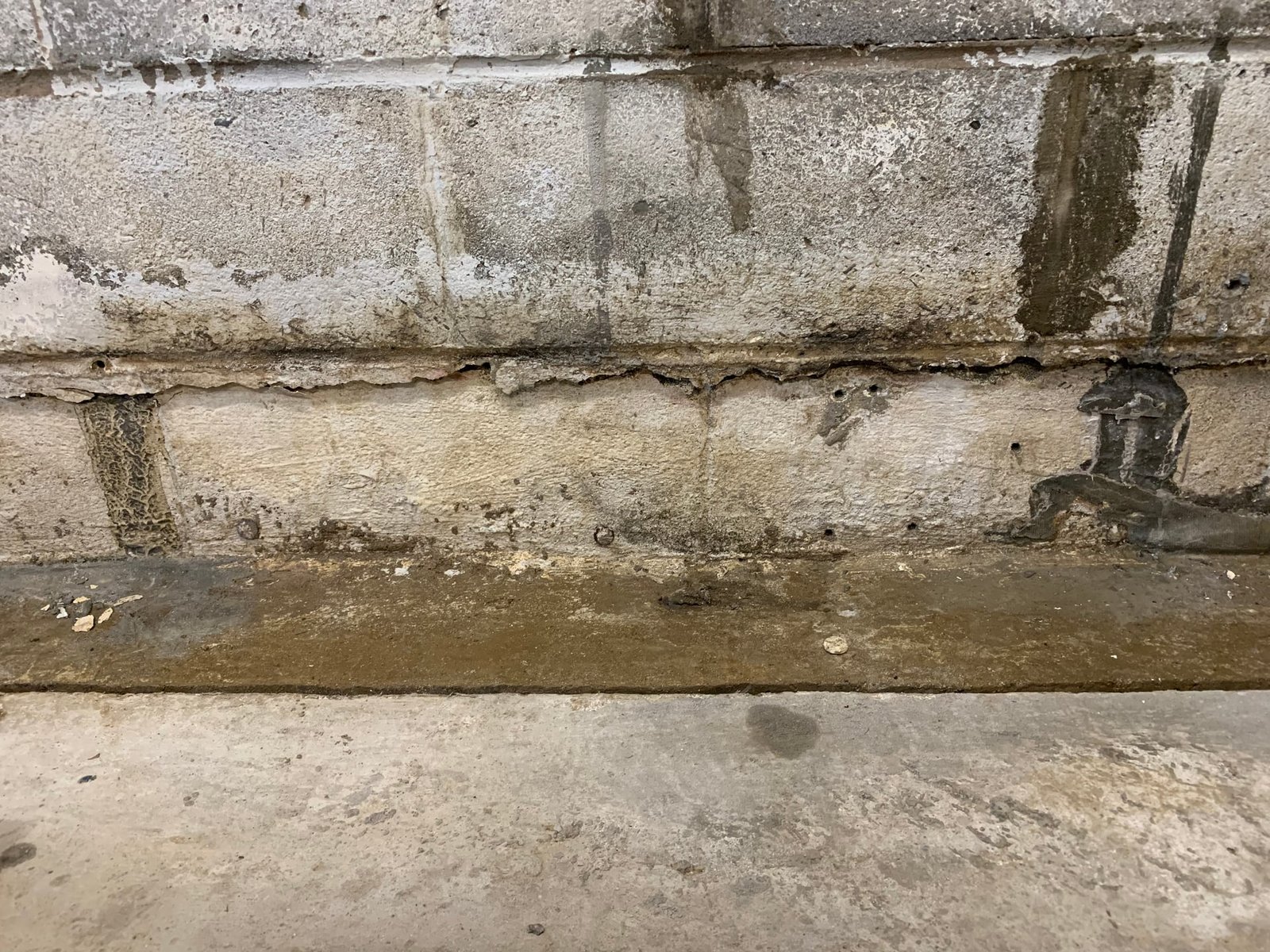
Visual signs that match this problem
- A crack running roughly horizontally across the foundation wall (left to right)
- Located most often in the lower third of the wall, especially within 1 foot of the basement floor
- May be hairline width or growing, sometimes with white efflorescence streaking down from it
- Sometimes accompanied by visible bowing inward, the wall not appearing perfectly flat
- Often present in concrete block (CMU) walls, but also in poured concrete
The real causes, in order of how often we see them
Hydrostatic pressure from saturated soil
After heavy rain or snowmelt, water-saturated soil exerts thousands of pounds of pressure per linear foot against the wall. The wall flexes inward, and a horizontal crack opens roughly where the moment is highest.
Frost heave and freeze-thaw
In CT and NY winters, ice expanding in soil adjacent to the foundation pushes the wall inward each freeze cycle. Repeated cycles open the crack wider over years.
Expansive clay soil
Clay-heavy soil swells dramatically when wet and shrinks when dry, putting cyclical lateral force on the wall. Common in parts of Fairfield County's lower elevations.
Original undersized footings or rebar
Older homes (pre-1980) often have walls that don't meet modern lateral-load standards. The crack reveals the structural deficiency the original design left behind.
Horizontal cracks signal active structural movement, not cosmetic settlement. Without intervention, the wall continues to bow inward, the crack grows, and eventually the wall can fail catastrophically. A horizontal crack within 1 foot of the basement slab is the highest-priority foundation crack we treat.
How we'd actually fix it
Step-by-step protocol we follow. Same approach across basement bowing wall repair jobs in CT and NY.
Inspect and confirm the cause
Free on-site inspection. We measure deflection, identify the load source, and document the crack with photos and moisture readings.
Stabilize the wall
We install carbon fiber strap reinforcement (Fortress Stabilization, ICC ESR-3815) or, for more advanced cases, the Stabl Wall structural strengthening system. Both restore the wall's resistance to lateral pressure.
Seal the crack itself
Polyurethane or epoxy injection through the full depth of the wall, depending on whether water is actively transmitting through the crack.
Address exterior pressure source
Where appropriate, we adjust grading, redirect downspouts, or install drainage relief so the lateral pressure that caused the crack is reduced going forward.
Lifetime warranty on the structural repair
Carbon fiber and Stabl Wall installations are backed by our lifetime transferable warranty. If the crack reopens, we come back free.
In-depth guides on this topic
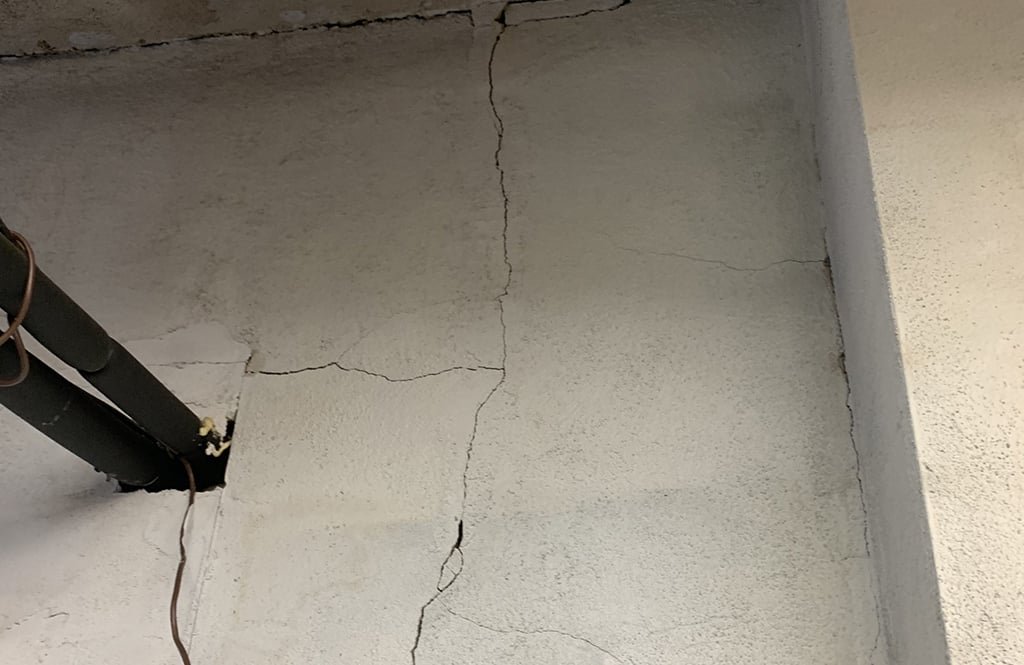
Stair-Step Cracks in Block Walls: Causes and Permanent Repair
If you see a stair-step crack tracking through the mortar joints of a block foundation, you're looking at differential settlement. Here's what causes it and the only repair methods that actually hold.
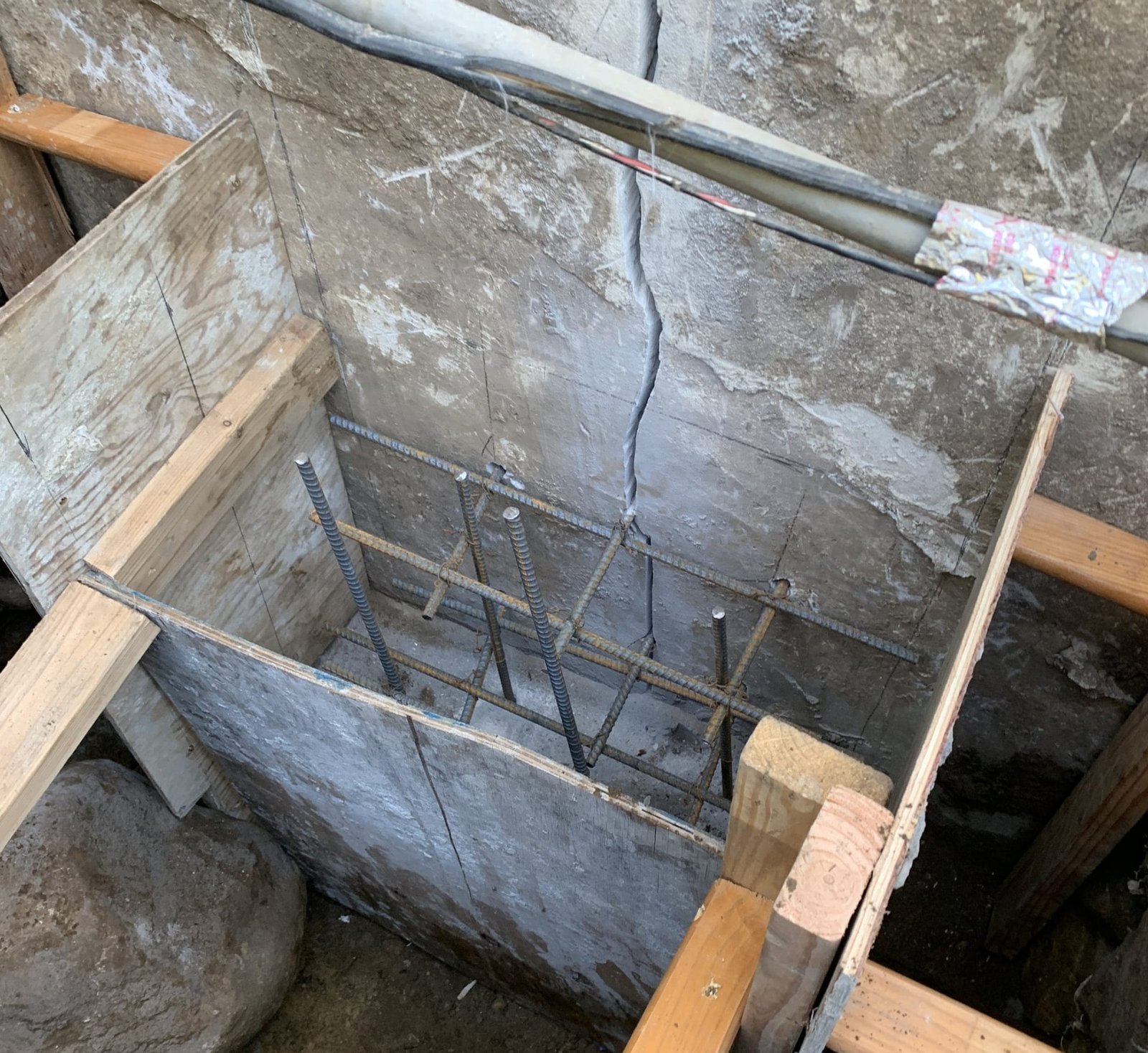
Polyurethane vs Epoxy Injection: Which Is Right for Your Crack?
The two main injection methods for foundation crack repair behave very differently. Here's when each one is correct, why mixing them up causes failures, and how we pick on every job.
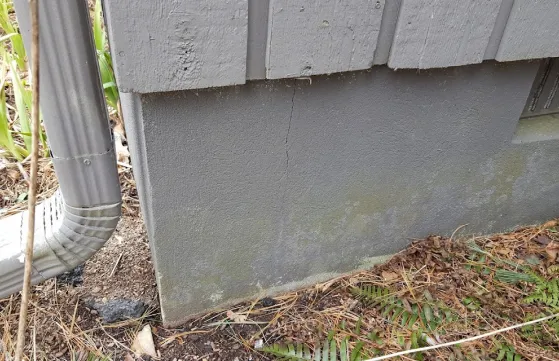
Everything You Need To Know About Foundation Cracks
Concrete foundation cracks develop for many reasons, soil settling, temperature, shoddy construction, structural issues. Here's how to identify the cause, classify the crack, and know when to call a pro.
Horizontal Crack in a Basement Wall, answered
Is a horizontal crack always serious?
Yes. Of all foundation crack patterns, horizontal cracks have the highest correlation with structural failure. Even a hairline horizontal crack should be inspected, because the cause (lateral pressure) is what makes it dangerous, not just the current width.
Can I just fill it with hydraulic cement?
No. Hydraulic cement has zero tensile strength and pops out the next time the wall flexes. Patching the symptom without stopping the lateral pressure is a guaranteed re-crack within 1-2 seasons. See our 68% case study for the data.
How urgent is this?
If the wall is visibly bowing or the crack is wider than a quarter inch, do not wait. Get an inspection within days. Even a stable-looking horizontal crack should be assessed within weeks, not months.
Does insurance cover this?
Most homeowner policies exclude long-term water damage and foundation movement, but if the cause is a sudden event (burst pipe, plumbing leak, severe storm), some claims succeed. We document the failure mode in detail to support whatever claim path applies.
What does this typically cost to repair?
A single horizontal crack with carbon fiber reinforcement and injection runs roughly $2,500 to $6,500 depending on length, wall type, and access. Bowing walls requiring multiple straps or Stabl Wall installation can range $5,000 to $15,000+. Free written quotes always.
Got a horizontal crack in a basement wall?
Free on-site inspection · written quote · lifetime transferable warranty on qualifying structural repairs.