Basement Wall Bowing or Buckling Inward
A wall that's visibly curving inward, even slightly, is one of the most serious foundation problems a home can have. It's the wall telling you it's losing the fight against the soil. Here's how to stop the movement and reinforce the wall before it fails.
Visual signs that match this problem
- The wall is no longer perfectly flat, when you sight along it, you see a curve
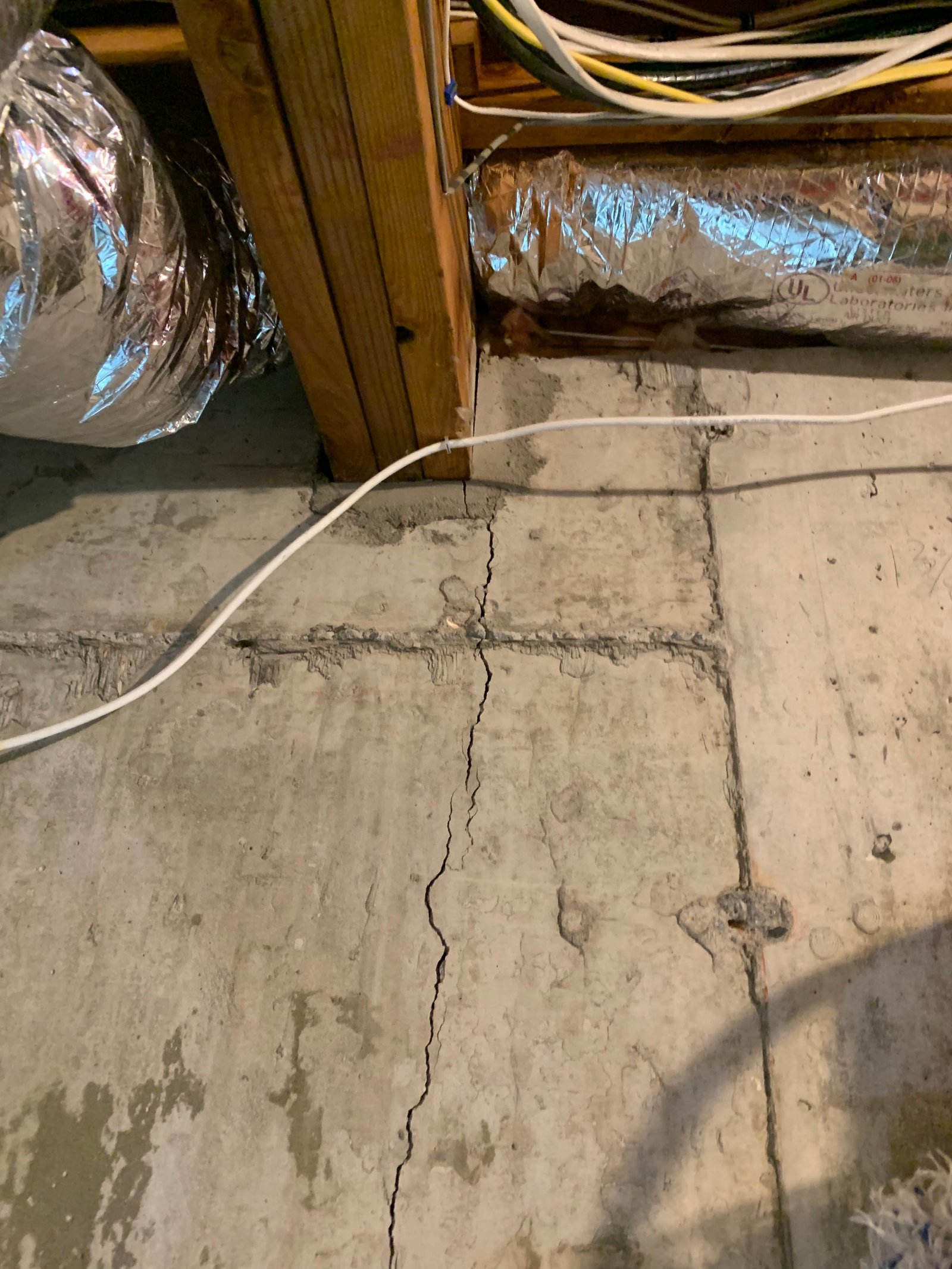
- A horizontal crack roughly mid-height or in the lower third (often within 1 foot of the slab)
- Sometimes accompanied by stair-step cracking on perpendicular walls
- Doors or windows above the wall that suddenly stick or won't close
- Bowing of more than 1 inch over the wall's height is structurally significant
The real causes, in order of how often we see them
Hydrostatic pressure
Saturated soil outside the wall pushes inward with force the wall was never designed to resist. This is the #1 cause we encounter in CT and NY basements.
Expansive clay soil
Clay-heavy backfill swells when wet, applying enormous lateral force. Once the wall starts to flex, each subsequent wet/dry cycle worsens the bow.
Frost heave
Ice expansion in soil during freeze cycles pushes the wall inward each winter. Compounding damage over decades is common in older homes.
Insufficient original reinforcement
Pre-1980 walls often lack the rebar density or wall thickness modern codes require. The bow reveals the wall is operating beyond its original safety margin.
A bowing wall is in active structural failure. Every wet season makes it worse. If left untreated, the wall can suddenly buckle, releasing soil into the basement and compromising the load path of everything above. Reinforcement should not be delayed past one season.
How we'd actually fix it
Step-by-step protocol we follow. Same approach across basement bowing wall repair jobs in CT and NY.
Measure the bow precisely
We use a plumb line and laser to quantify the deflection at multiple heights. This determines the reinforcement system, light bow gets carbon fiber straps; heavier bow gets Stabl Wall or wall anchors.
Carbon fiber strap reinforcement
For bows under ~1.5 inches, vertical carbon fiber straps (Fortress, ICC ESR-3815) bonded across the wall distribute lateral load and prevent further movement. Strap spacing is calculated by load.
Stabl Wall structural strengthening
For larger bows, the Stabl Wall system uses anchored carbon fiber bracing that can both stop movement AND gradually pull the wall back toward plumb over months. We're certified Stabl Wall installers.
Wall anchors for severe cases
Helical wall anchors driven 10+ feet into stable soil can hold and slowly pull severely bowed walls. Reserved for cases where carbon fiber alone isn't enough.
Pressure relief and drainage
Whatever reinforcement we install, we also reduce the lateral pressure that caused the bow. Exterior drainage adjustments, downspout extensions, or interior French drain where appropriate.
In-depth guides on this topic
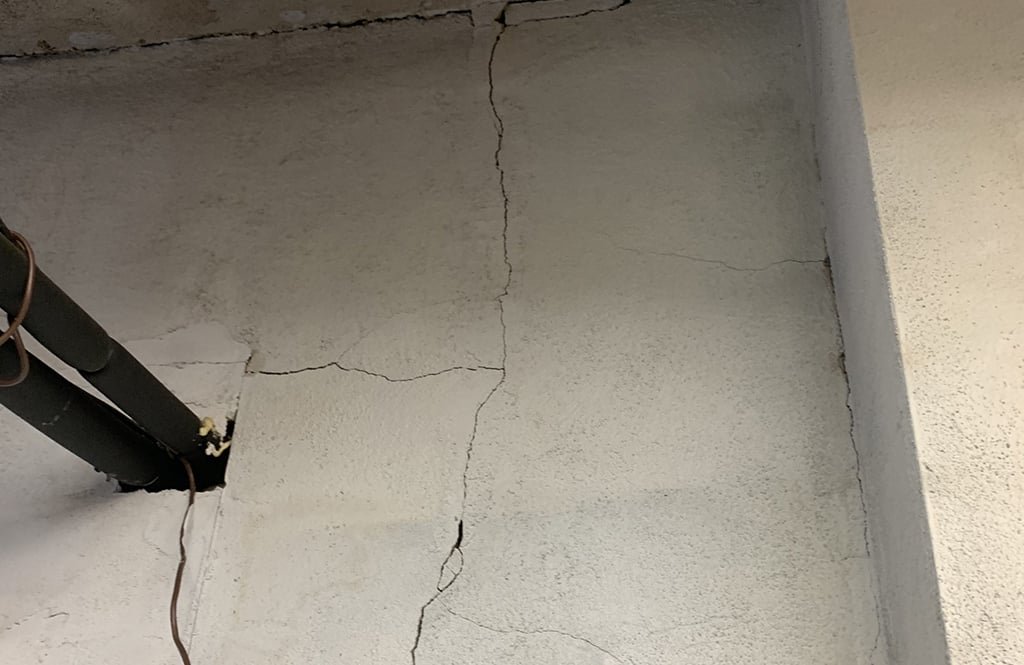
Stair-Step Cracks in Block Walls: Causes and Permanent Repair
If you see a stair-step crack tracking through the mortar joints of a block foundation, you're looking at differential settlement. Here's what causes it and the only repair methods that actually hold.
Why 68% Of Our Work Fixes Other Contractors' Mistakes, A Case Study From 325 Jobs
We audited every repair we completed in 2023 and 2024. Of 325 jobs, 221 were re-repairs, foundations, walls, and basements that another contractor had already 'fixed.' Here's what we found, why it keeps happening, and how to avoid paying twice for the same crack.
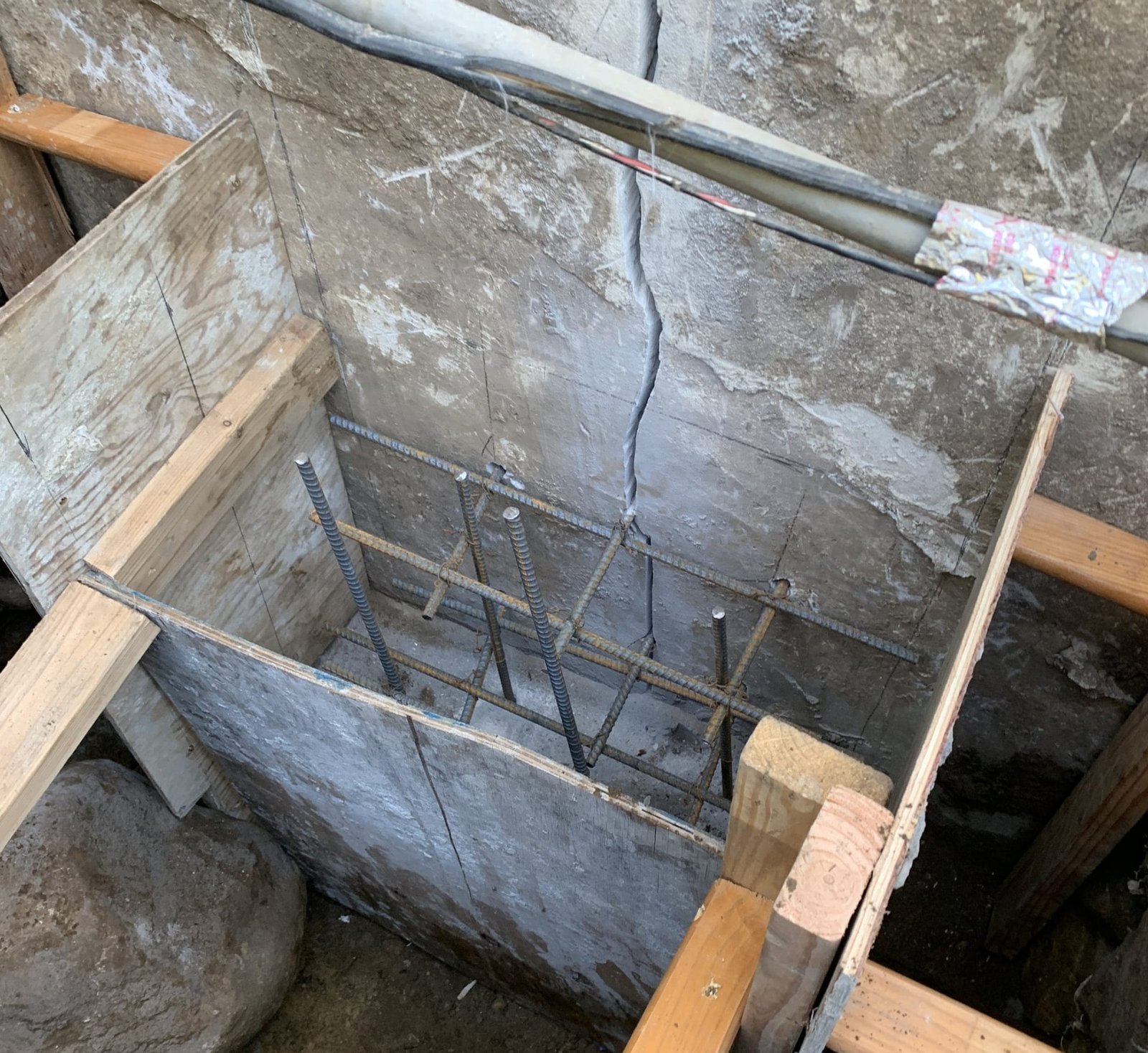
Polyurethane vs Epoxy Injection: Which Is Right for Your Crack?
The two main injection methods for foundation crack repair behave very differently. Here's when each one is correct, why mixing them up causes failures, and how we pick on every job.
Basement Wall Bowing or Buckling Inward, answered
How much can a wall bow before it's an emergency?
A general rule: deflection up to 1 inch is reinforceable with carbon fiber straps. Between 1 and 2 inches, we typically use Stabl Wall or wall anchors. Beyond 2 inches, the wall may need partial replacement. But the inspection is what determines the system, not just the number.
Can a bowed wall be straightened back?
Sometimes. The Stabl Wall system and helical wall anchors can apply controlled tension to gradually bring a wall back toward plumb over weeks or months. Severely bowed walls are usually stabilized in place rather than fully straightened.
Will this affect the home's resale value?
A documented, professionally reinforced wall with a transferable lifetime warranty rarely affects sale value, in fact, buyers and inspectors view a documented repair as a positive. An undocumented or untreated bowing wall is a major red flag at inspection.
Do I need a structural engineer?
For most carbon fiber installations, we work with manufacturer engineering specs that meet code without a separate engineer's stamp. For severe bows, walls being pulled back, or municipal permit requirements, we coordinate with a licensed PE.
What's the typical cost?
Carbon fiber strap reinforcement runs roughly $400-$700 per strap; most jobs use 4-10 straps. Stabl Wall installations are typically $5,000-$12,000. Wall anchors $7,000-$20,000 depending on count. Free written quotes always.
Got a basement wall bowing or buckling inward?
Free on-site inspection · written quote · lifetime transferable warranty on qualifying structural repairs.