
White Powder or Chalky Deposits on a Basement Wall
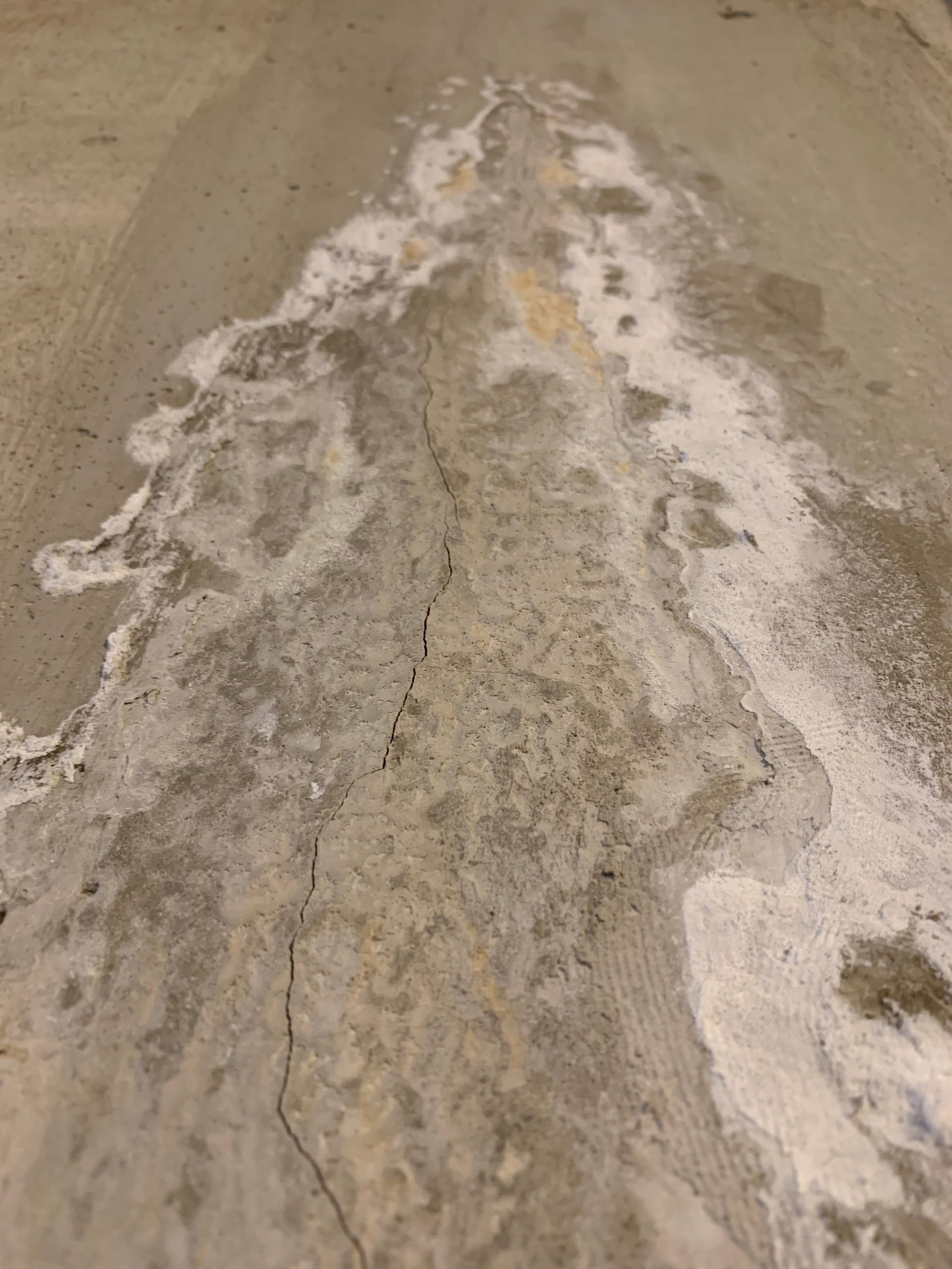
If you see white, chalky, sometimes fluffy deposits on your basement wall, that's efflorescence. It's not mold, not dangerous in itself, but it is a clear sign that water is moving through your wall, which is a problem worth fixing before it gets worse.
Visual signs that match this problem
- White, chalky, or crystalline deposits on the surface of concrete or block walls
- Sometimes a fluffy or fuzzy texture (especially on block walls)
- Often concentrated near cracks, mortar joints, or the bottom few feet of the wall
- Can be wiped off easily, but reappears after the next rain or wet period
- May be accompanied by paint peeling, drywall bubbling, or musty smells nearby
The real causes, in order of how often we see them
Water is moving through the wall
Efflorescence is mineral salts dissolved out of the concrete or mortar by water passing through. As the water reaches the inside surface and evaporates, the salts are left behind. No water, no efflorescence.
Hydrostatic pressure
Saturated soil outside the wall forces water through any porous path: hairline cracks, mortar joints, the wall material itself. The deposits mark where water exited.
High water table
Common in low-lying areas of CT/NY (Bridgeport, Stamford waterfront, parts of Yonkers and the Bronx). Groundwater sits against the foundation year-round, slowly leaching minerals.
Failing waterproofing or drainage
If your home has waterproofing or drainage that was installed decades ago, it may be failing silently. Efflorescence is often the first visible sign.
Efflorescence itself is harmless; the underlying water movement is the problem. Long-term water transmission through the wall causes rebar corrosion, mortar degradation, mold growth on adjacent finishes, and eventually structural weakening. Treat the cause now and the secondary damage stays small.
How we'd actually fix it
Step-by-step protocol we follow. Same approach across basement waterproofing jobs in CT and NY.
Identify the source of water entry
We inspect for cracks, leaking joints, capillary rise from the slab edge, or general wall porosity. Each has a different fix.
Seal active leak paths
Cracks get polyurethane or epoxy injection. Leaking mortar joints get cleaned and sealed. Capillary rise gets membrane treatment.
Address exterior pressure
Where appropriate, we adjust grading, redirect downspouts, install interior or exterior drainage, or apply waterproofing membrane to the exterior wall face.
Clean the existing efflorescence
We remove the surface deposits with appropriate cleaners (avoiding muriatic acid which damages concrete). The wall is left ready for primer/paint if you want to refinish.
Verify with a wet season
Where the cause was hydrostatic, we recommend revisiting after the next significant rain to confirm no new deposits are forming. Lifetime warranty on qualifying repairs.
In-depth guides on this topic
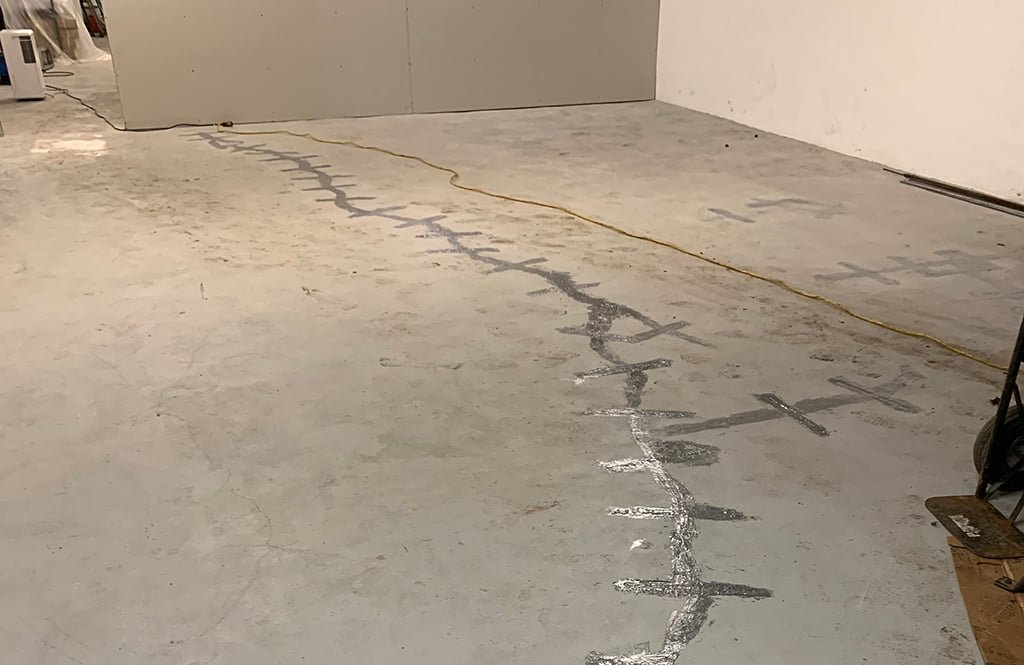
Waterproofing For Basement Walls
What is the best waterproofing method for basement walls? Here's how to find the core issue, improve drainage, and keep ventilation flowing.
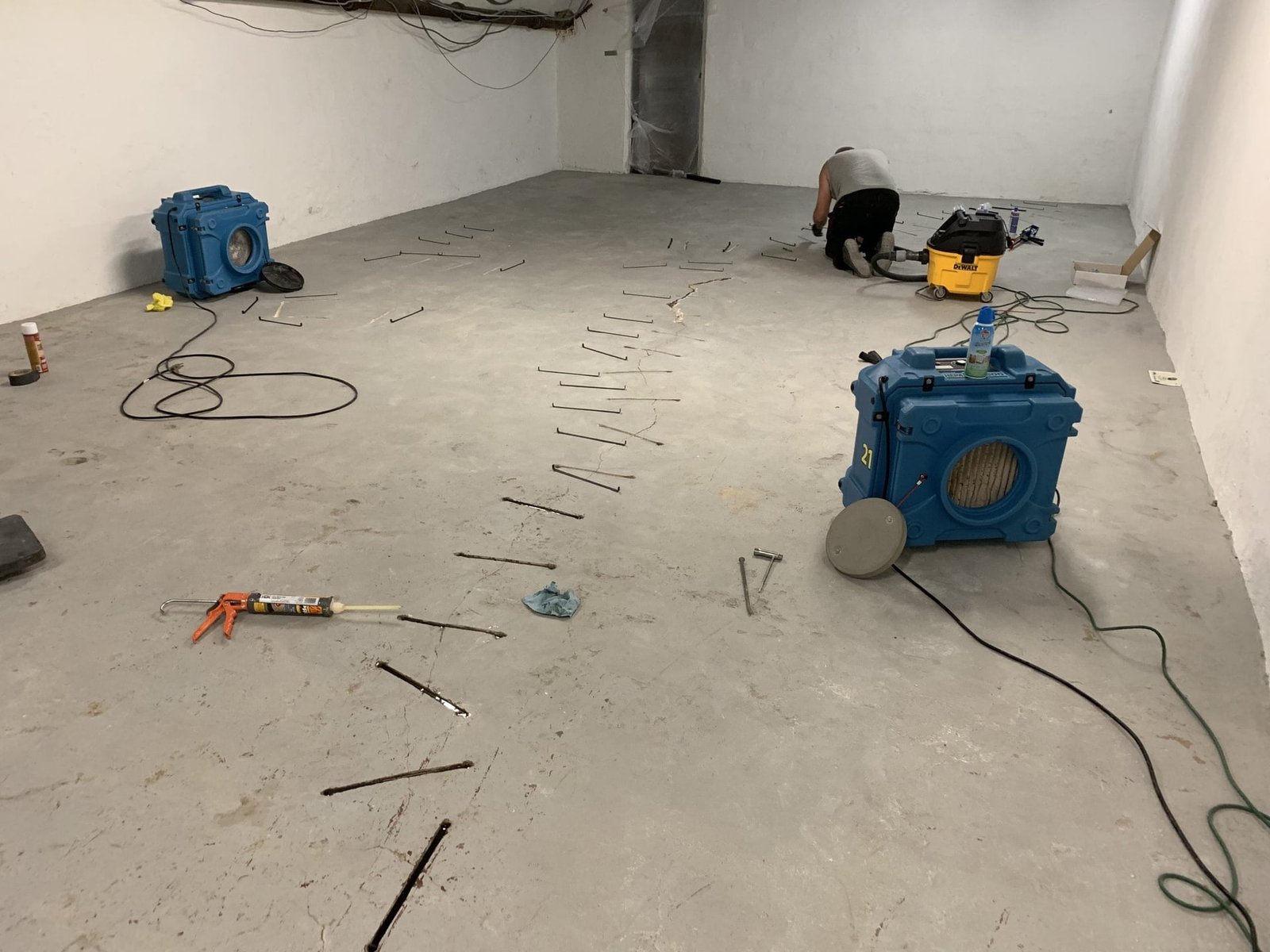
Why Your Basement Keeps Leaking Despite Previous Repairs
If you've already paid for foundation work and water is still finding its way in, you're in a familiar pattern. Here are the five reasons repeat leaks happen, and how to break the cycle.
Spring Foundation Maintenance Checklist for Northeast Homeowners
Winter freeze-thaw cycles are the single biggest stressor on Northeast foundations. Here's the spring maintenance walk-around that catches problems before they become repairs.
White Powder or Chalky Deposits on a Basement Wall, answered
Is efflorescence the same as mold?
No. Efflorescence is inorganic mineral salt and is not a health hazard. Mold is organic and can be. They sometimes appear in the same area because both indicate moisture, but the white chalky deposit itself is not mold.
Can I just paint over it?
Not effectively. Paint applied over efflorescence (or over the wall while water is still moving through) will peel, blister, and fail within months. The water has to be stopped first; then the surface can be cleaned and refinished.
Will it come back after I clean it?
Yes, every time, until the water source is stopped. That's actually how efflorescence is useful diagnostically: if it reappears in the same spots, you know exactly where water is entering.
Does this mean I need waterproofing?
Often yes, but not always. Sometimes a single crack injection or a downspout adjustment solves it. We diagnose the cause first, then propose the smallest effective fix, not the biggest one.
How urgent is it?
Low urgency in itself, high urgency for the water that's causing it. Fixing within 6-12 months prevents secondary damage. Fixing within 5 years usually prevents major structural consequences.
Got a white powder or chalky deposits on a basement wall?
Free on-site inspection · written quote · lifetime transferable warranty on qualifying structural repairs.