
Vertical Foundation Crack That's Leaking Water
A vertical crack in your foundation wall that bleeds water every time it rains is one of the most common foundation calls we get. The good news: it's almost always permanently fixable in a single visit. The catch: only with the right injection chemistry.
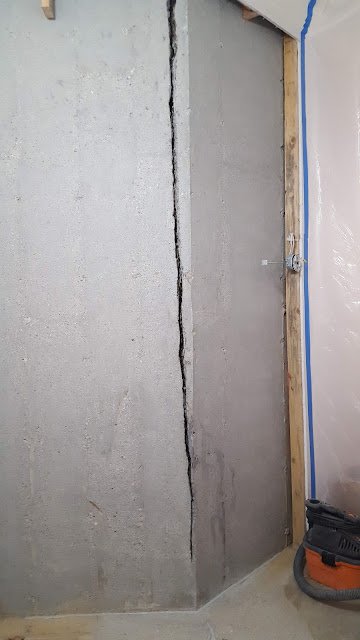
Visual signs that match this problem
- A crack running roughly straight up and down on the basement wall
- Active water bead, drip, or stream during or shortly after rain
- White or rust-colored mineral deposits (efflorescence) on the wall around the crack
- Sometimes wider at the top than the bottom, indicating settlement on one side
- Often appearing within the first 5 years of construction, then stable in width
The real causes, in order of how often we see them
Foundation settlement
The most common cause. As the soil under one part of the foundation compresses or shifts, the wall develops a vertical crack. Once settlement stabilizes (usually within 5-10 years for poured concrete), the crack stops widening but still admits water.
Concrete shrinkage
Poured concrete naturally contracts as it cures. If shrinkage stresses concentrate in one spot, a vertical crack develops, often within the first 2 years. These rarely indicate structural issues but freely admit water.
Hydrostatic pressure during rain
Even a stable crack becomes a leak path when the soil outside the wall saturates and water pressure builds. This is why the leak appears only during/after rain, not constantly.
Failed previous repair
If hydraulic cement, caulk, or surface sealant was applied to an active crack, it usually fails within 1-2 winters. We see this in roughly 22% of the leaking-crack jobs we redo.
An actively leaking vertical crack rarely poses immediate structural risk, but the water it admits causes real damage over time: efflorescence, rebar corrosion in the wall, mold and mildew on adjacent finishes, and rotting of basement framing. Fix it before the secondary damage becomes the bigger expense.
How we'd actually fix it
Step-by-step protocol we follow. Same approach across foundation crack repair jobs in CT and NY.
Diagnose moisture and movement
We inspect for active water transmission, measure crack width, check for ongoing movement vs stability, and identify the exterior cause (downspout, grading, water table).
Choose the correct resin
For an actively leaking crack, polyurethane injection is almost always correct, it expands on contact with water, chases the leak path through the wall, and remains slightly flexible. Epoxy is reserved for dry structural cracks. See our explainer.
Full-depth pressure injection
Injection ports placed along the crack, then resin pressure-injected to full wall depth. We verify back-pressure to confirm the resin reached the exterior face. This is where most failed repairs went wrong.
Address exterior cause
Where the leak was driven by a downspout, slope, or drainage problem, we redirect or repair so the wall isn't loaded the same way again.
Cosmetic finish + warranty
We grind the crack face flush, color-match the surface coat, and document the repair with before/during/after photos. Lifetime transferable warranty.
In-depth guides on this topic
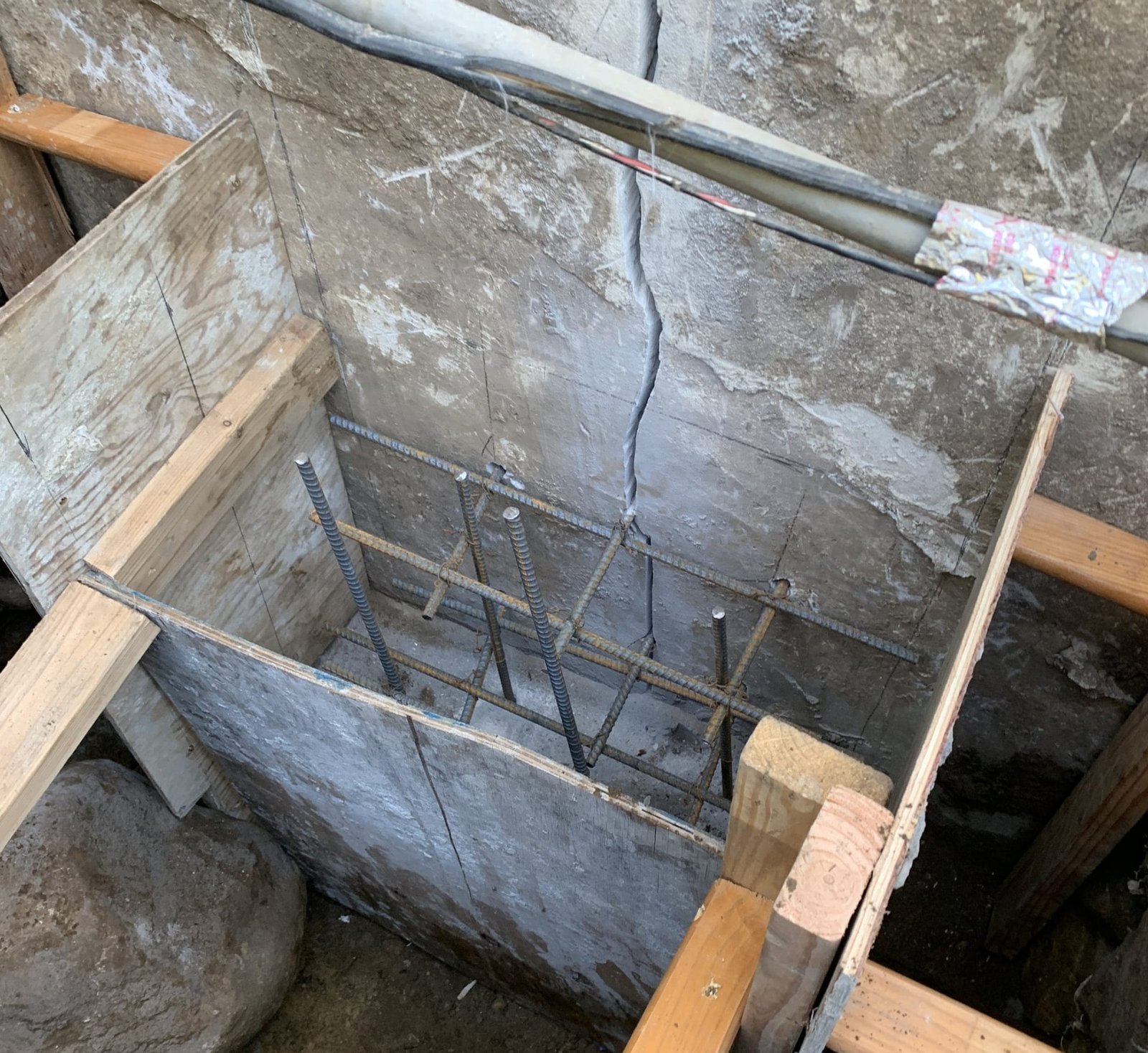
Polyurethane vs Epoxy Injection: Which Is Right for Your Crack?
The two main injection methods for foundation crack repair behave very differently. Here's when each one is correct, why mixing them up causes failures, and how we pick on every job.
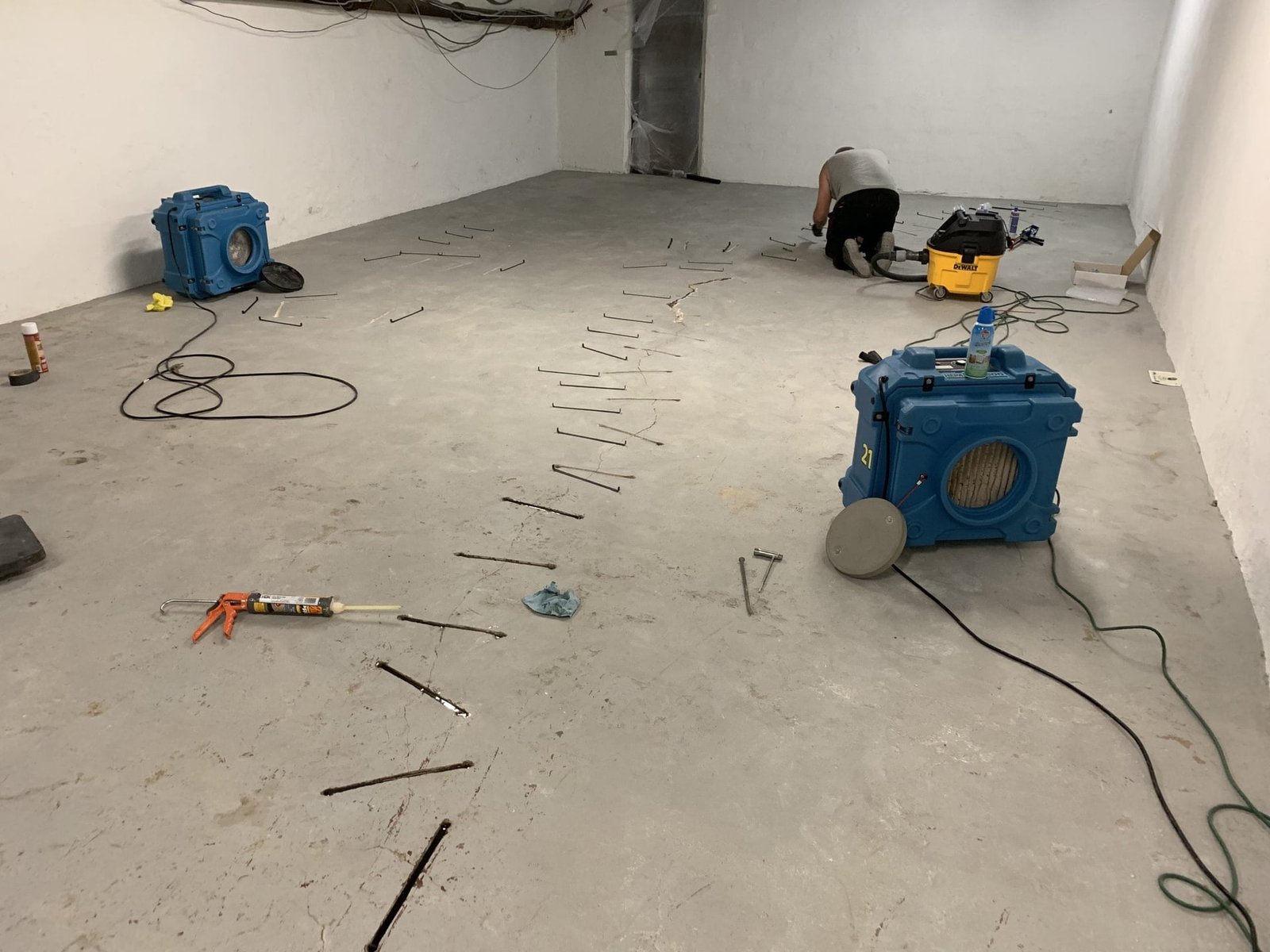
Why Your Basement Keeps Leaking Despite Previous Repairs
If you've already paid for foundation work and water is still finding its way in, you're in a familiar pattern. Here are the five reasons repeat leaks happen, and how to break the cycle.
How Much Does Foundation Crack Repair Cost in CT and NY?
A transparent breakdown of foundation crack repair costs across Connecticut and New York. Three things drive your price — severity, whether it's leaking, and whether it's structural or cosmetic — and we'll walk through each.
Vertical Foundation Crack That's Leaking Water, answered
How quickly can this be fixed?
A single vertical crack injection is typically a 1-day job once we're on site. The resin bonds within 60 minutes and fully cures within 24 hours. You can use the basement normally the next day.
Will this crack come back?
Not at the same spot, if it's properly injected to full depth. Polyurethane bonds to the concrete and flexes with the wall. The vast majority of vertical-crack leaks we repair never reappear, which is why we can offer a lifetime warranty.
Should I dig out the exterior to fix this?
Almost never necessary for a vertical crack. Interior pressure injection reaches both faces of the wall and is far less invasive than exterior excavation, with equal or better long-term performance.
Why does it only leak during rain?
When the soil outside the wall is dry, capillary action through a hairline crack is minimal. Once the soil saturates, hydrostatic pressure builds and water is forced through any path of least resistance, including the crack.
Is this a big deal or routine?
It's routine if caught early and fixed correctly. It becomes a bigger deal if you ignore it for years and let secondary damage (mold, rot, rebar corrosion) accumulate. Either way, a free inspection takes 45 minutes and gives you a real answer.
Got a vertical foundation crack that's leaking water?
Free on-site inspection · written quote · lifetime transferable warranty on qualifying structural repairs.