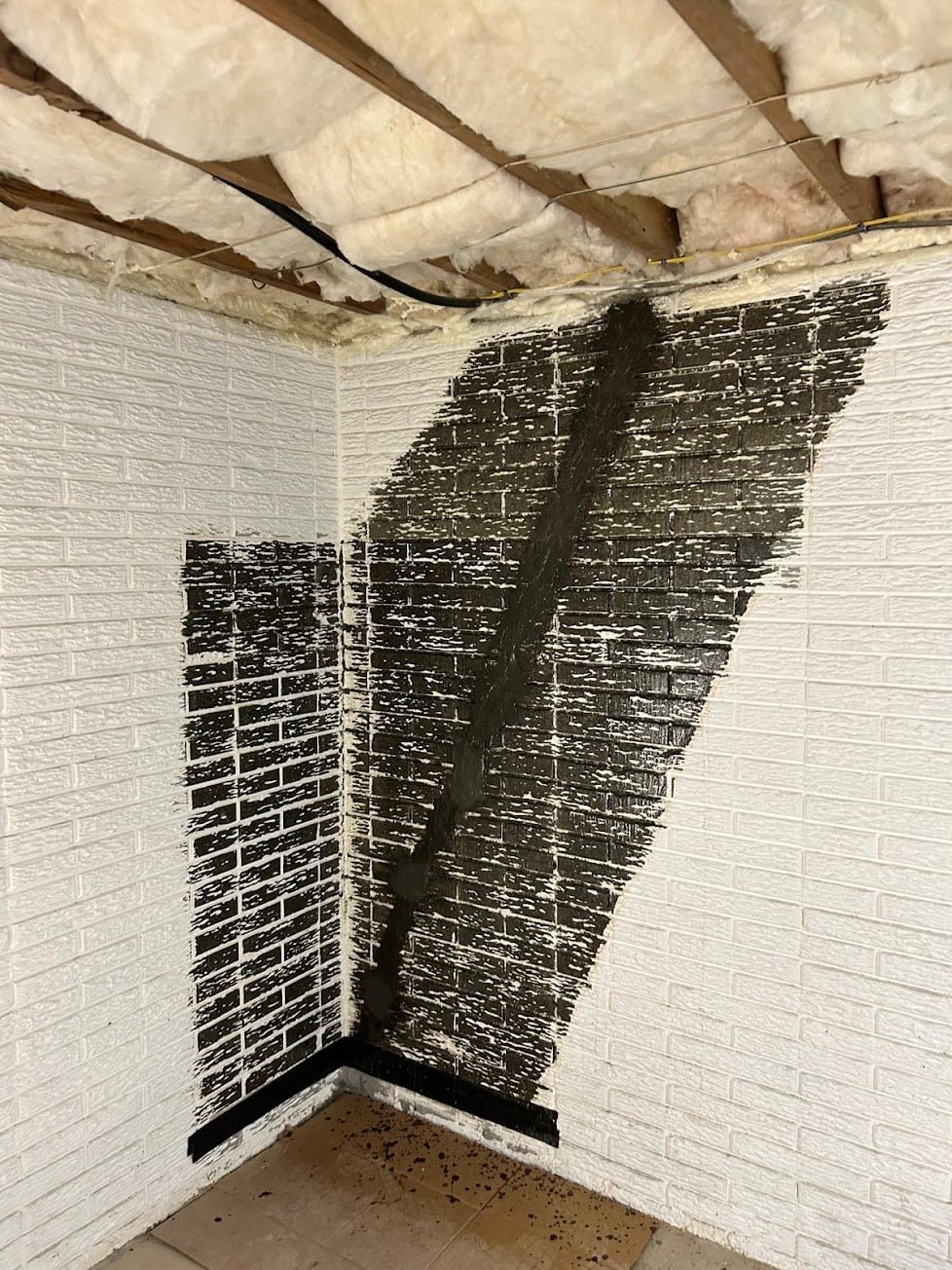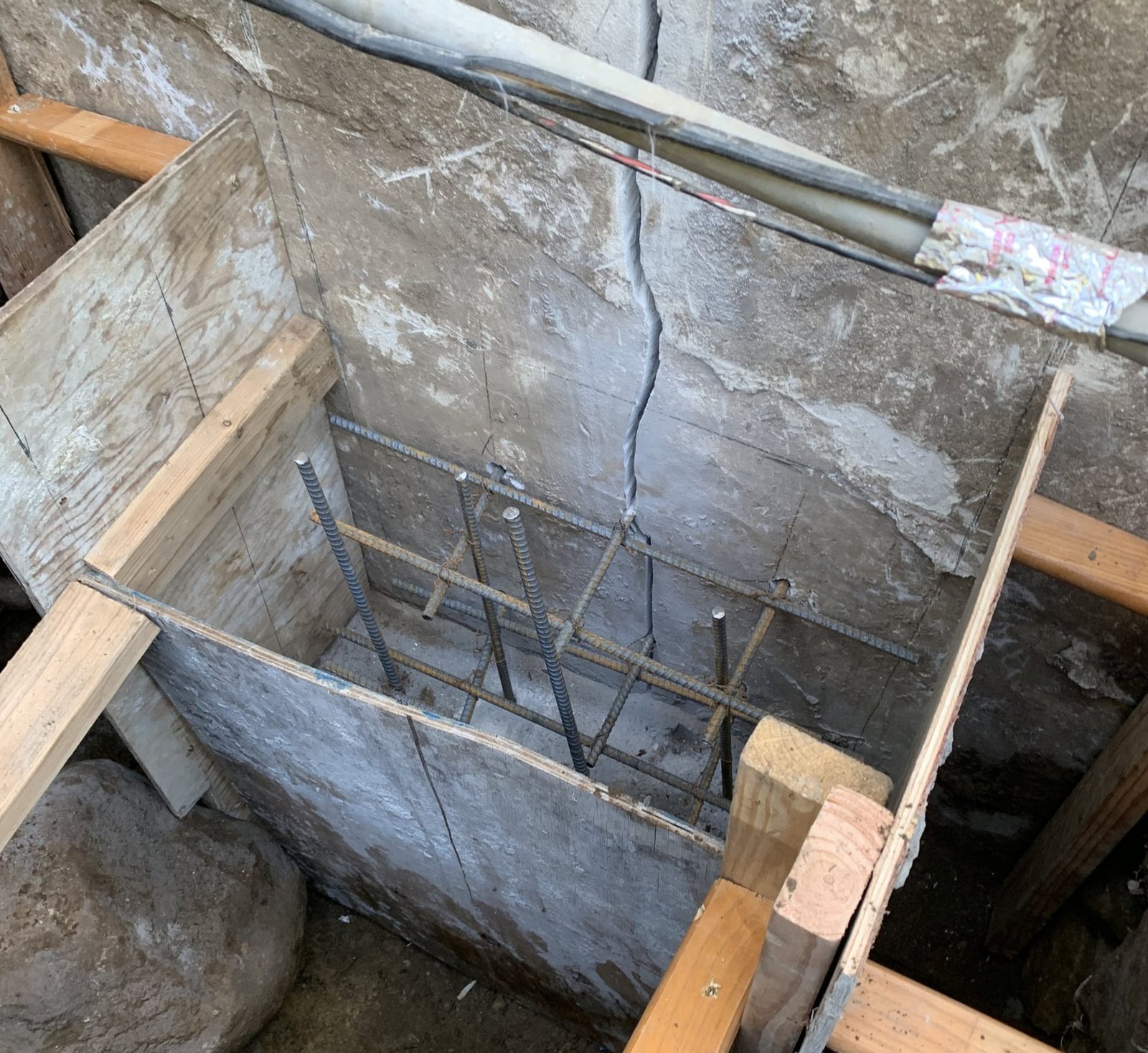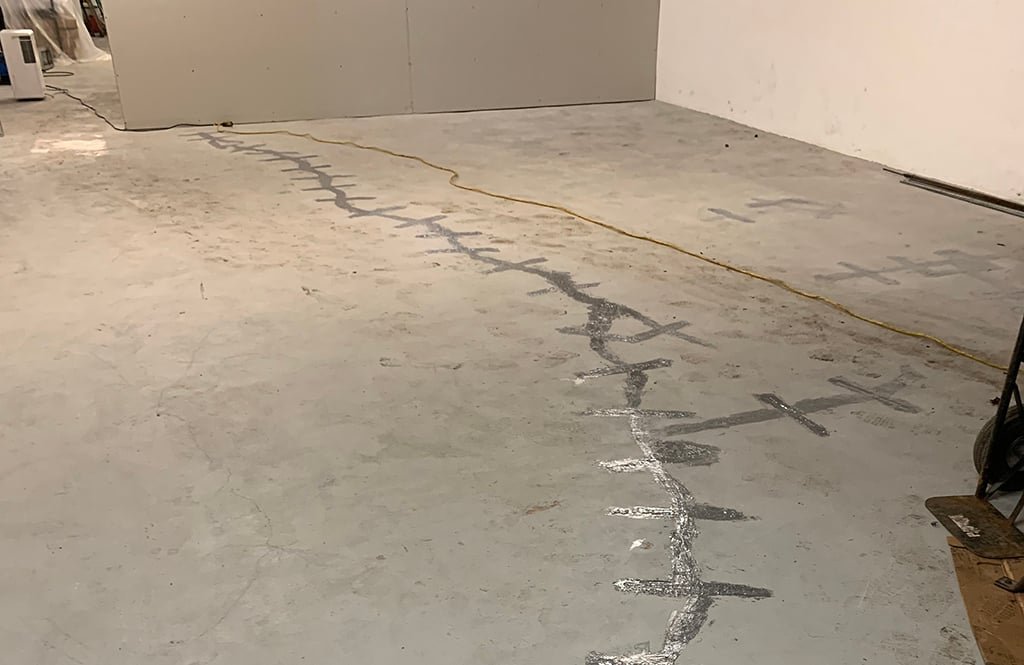
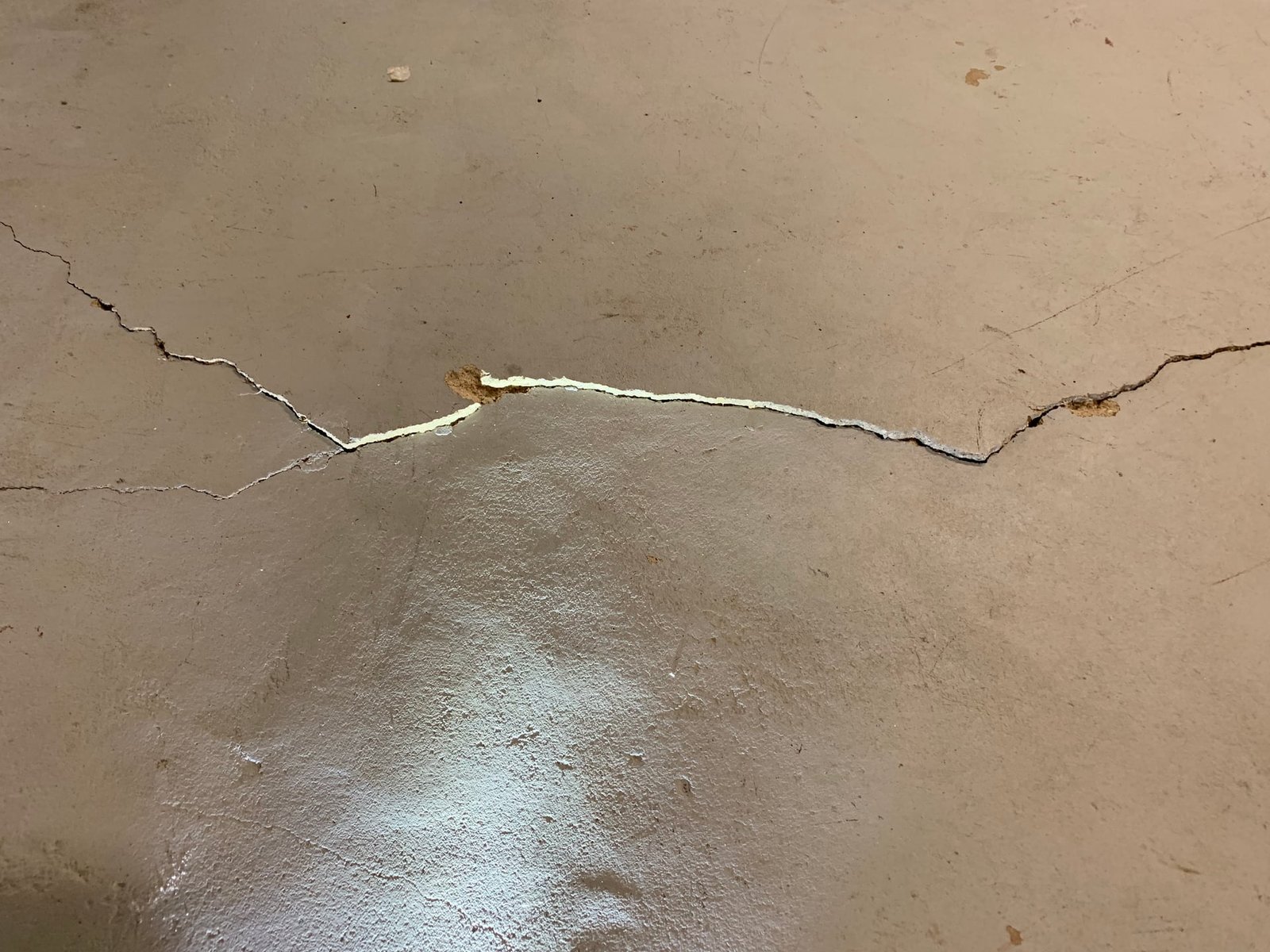

A wet basement has two separate facts about it. There is where the water appears, which is usually a crack, a joint or a patch on the floor, and there is how the water got to that point in the first place. Homeowners almost always describe the first. Repairs that last are built around the second.
That distinction matters because most of the routes below are not actually faults in the foundation. Several of them are faults in something attached to it, or buried near it, or simply in where the water was pointed. Seal the crack without changing the route and the water goes to the next weakest point, which is why so many basements get repaired more than once. We wrote about that pattern in detail in our 68% case study.
First, the single most useful question
Before any of the seven, answer this: when does it happen? The timing narrows the field faster than anything you can see.
- During or just after rain, then stops: surface water. Routes 1 to 4 below.
- For weeks every spring, regardless of individual storms: ground water. Route 5.
- Late winter only, while there is still snow on the ground: Route 6.
- Warm humid weather, worst in July and August, nothing to do with rain: Route 7, and it is not a leak at all.
Route 1: The backfill around your own foundation
When a foundation is built, a trench is dug wider than the wall and then filled back in around it. That backfill is never compacted to the density of the undisturbed ground beside it, and it never will be. For the life of the house it stays looser and more permeable, which means it is the easiest thing for water to get into.
This is why grading and downpipes matter so much more than people expect. Ground that slopes back toward the house, or a downpipe discharging a metre from the wall, is putting water directly into the one strip of soil that was built to accept it. From there it sits against the wall until it finds a way through.
How to check: walk the perimeter during heavy rain, which is genuinely the most informative ten minutes available to you. Look for water standing against the wall, soil that has settled into a trough along the foundation line, and where each downpipe actually ends up.
Route 2: Window wells and bulkhead stairwells
A window well is a hole in the ground against your foundation with a window at the bottom of it. An exterior cellar stairwell is the same thing with a door. Both were built with a small drain at the bottom, and on a house of any age that drain has very often silted up or was never properly connected.
Once the drain stops carrying water, the well fills faster than it empties and the water comes in over the sill or around the door frame. It is not coming through the wall at all. From inside it looks exactly like a foundation leak, which is why this one gets misdiagnosed more than any other on the list.
How to check: look into the well during or straight after heavy rain. If there is standing water in it, you have your answer. A fan-shaped wet patch spreading inward from a doorway is the same tell.
Route 3: The service trench from the street
Every house has at least one trench running to it from the road, carrying water, sewer, gas or electricity. Like the backfill in Route 1, that trench was refilled by hand and is more permeable than the ground either side of it. Water in the soil finds it, travels along its length toward the house, and arrives at the single lowest point on that run, which is the penetration where the service passes through your wall.
Nothing about this is visible from the surface. The giveaway is location: if the water appears right where a pipe or conduit comes through the wall rather than at a crack, the trench is the first thing to consider.
How to check: does the water track with rainfall, or run continuously? Rain-driven points at the trench. Continuous points at the pipe itself, which is a plumbing question rather than a foundation one.
Route 4: A buried downpipe run that has failed
On larger properties the downpipes are often piped underground and taken well away from the house. That is the right idea, and it works until the buried run cracks, separates at a joint or blocks with silt and roots. At that point it stops carrying roof water away and starts discharging it into the ground wherever the break is, which is usually close to the building.
A roof is the largest water-collecting surface on any property and a single downpipe concentrates a quarter of it into one point. A failed buried run therefore delivers a very large volume to exactly the wrong place, every time it rains, with nothing showing at the surface.
Route 5: The water table itself
Routes 1 to 4 are all surface water being delivered to the wrong place. Route 5 is different in kind: the ground water level rises to meet your foundation, and the pressure comes from below and from the side rather than from above.
This is hydrostatic pressure, and it behaves differently from a leak. It arrives on a seasonal schedule rather than with individual storms, it pushes water up through the floor as well as in through the walls, and it does not care how good your gutters are. On the low ground near a river, a reservoir or a wetland it is the dominant condition for weeks each spring.
It also explains two things people find baffling. Water coming up through the middle of a floor, with dry walls, is almost always this. And a deep nineteenth-century cellar can spend weeks under pressure while a modern eight-foot basement next door, on the same ground, never does, simply because the floor is three or four feet higher.
Sealing alone rarely finishes the job here, because the pressure finds the next weak point. What works is relieving it and giving the water a managed route out, which is the core of basement waterproofing rather than crack repair. If the floor is the problem rather than the walls, see water coming through a basement floor.
Route 6: Snow, not rain
A snow bank is a slow-release reservoir, and it is the most underrated item on this list. Rain runs off and is gone within hours. Snow ploughed against a wall, or shed off a roof into the same spot every winter, melts over weeks and feeds water into a few square metres continuously.
Worse, it does it while the ground below is often still frozen and cannot absorb anything, so almost all of that meltwater travels along the surface of the frozen layer straight into your backfill. More water can reach a foundation from a melting plough bank than from a summer storm.
How to check: if the damp appears in February and March and fades by May, this is the first place to look. The fix is frequently free. Move the pile.
Route 7: It is not water entry at all
A below-grade wall sits at roughly ground temperature all summer, somewhere in the low teens. Warm humid July air meeting that surface drops below its dew point and gives up its moisture onto the wall and floor. No water has entered the building. It was carried in as vapour through the doorway and condensed out.
This matters because sealing does not fix it and can make it marginally worse by trapping moisture in the masonry. The answer is to deal with the air: a dehumidifier sized for the space, sensible ventilation, insulating cold pipes, and not drying washing down there.
Reading the evidence the basement has already given you
Two things in a basement are records rather than problems, and both get destroyed before anyone useful sees them.
The first is the white crystalline deposit on masonry. That is efflorescence, mineral salt left behind by water that has passed through the wall and evaporated on the inner face. It is not mould and it is harmless to touch. Where it is heaviest is where most of the water has been moving, which makes it the best map of the route you will ever get. Photograph it before you clean it.
The second is the shape of the wet patch. Water entering through a crack leaves a trail from that crack. Water coming over a threshold spreads inward in a fan. Water arriving under pressure through a floor appears in the middle with dry walls. Water condensing coats whole surfaces evenly. Those four patterns distinguish most of the seven routes without any equipment at all.
Which routes dominate where
Across Fairfield County and Westchester County the mix shifts considerably, and it is worth knowing the local tendency before assuming the national advice applies to you.
- Near the Sound and the tidal rivers, the water table moves with the tide as well as the weather, so Route 5 runs on a cycle that has nothing to do with rainfall.
- On the steep Hudson villages, water travels downhill along the top of the rock and arrives at the uphill wall, so Route 1 dominates and regrading genuinely works.
- On the rocky inland towns, ledge close to the surface means almost nothing soaks away where it lands, which makes Routes 1 and 4 unusually punishing.
- On flat ground there is nowhere lower to send water to, so the solutions that work on a slope do not apply and collection matters more than diversion.
- In the dense older villages and city neighbourhoods, Routes 2 and 3 account for a surprising share, because the openings and the buried services are both old.
What each route actually needs
Matching the fix to the route is the whole point of the exercise.
- Routes 1, 4 and 6 are drainage and grading work. Often inexpensive, occasionally free, and they should be dealt with before anything is sealed.
- Routes 2 and 3 are about openings rather than walls. Clear or reinstate the drain, cover the well, seal the penetration properly and interrupt the trench.
- Route 5 needs pressure relieved and water collected, which is basement waterproofing work rather than a crack repair.
- Route 7 needs a dehumidifier, not a contractor.
- Where a crack genuinely is the entry point, it needs sealing at full depth rather than at the surface. That is foundation crack repair, and if the wall has also moved it may need structural reinforcement.
One thing worth saying plainly: a filled crack has no strength. If the ground is still moving, any seal across it will part again regardless of who applied it or what it cost. That is the mechanism behind most repeat repairs, and it is covered in why your basement keeps leaking despite previous repairs.
What we do on the first visit
We walk the outside before we look at the crack. Where the downpipes discharge, how the ground falls, where the snow goes, what has been built or repaved nearby recently, where the services enter. Then we read the inside: the pattern of the wet patch, the deposits, the moisture readings, and whether the floor is dry while the wall is wet or the other way round.
Often that produces a cheaper answer than the one the homeowner was expecting, and when it does we say so. Telling someone their foundation is sound and their window well drain is blocked is a worse day for our invoice and a better one for their house.
Raf Volkov
Raf has personally inspected and supervised more than 1,300 foundation repairs across Fairfield County, CT and Westchester County, NY since 2002. He attends World of Concrete and manufacturer trainings every year, currently holds 60+ active industry certifications, and works with a scientific background spanning microbiology, toxicology, and structural engineering — applied to every wall, slab, and footing we touch.
Got a crack that needs a real diagnosis?
We service Fairfield County CT and Westchester County NY. Free on-site inspection, honest root-cause diagnosis, written quote, no obligation.